

Introducing Dr. Nur Faizal bin Kasri, Senior Lecturer, Universiti Teknologi Malaysia
Department / Research Area: Faculty of Electrical Engineering / Clean Energy Technology & Power Electronics
Email Contact: nurfaizal@utm.my
If you ever visit Malaysia, one of the first things you must experience is a pasar malam—our traditional open-air night markets. They are a beautiful sensory explosion: the sizzle of street food, the bright lights, and the chatter of communities coming together. But if you stand there for a few minutes, another less pleasant reality hits you. The air quickly fills with choking black smoke, and a deafening roar echoes down the street.
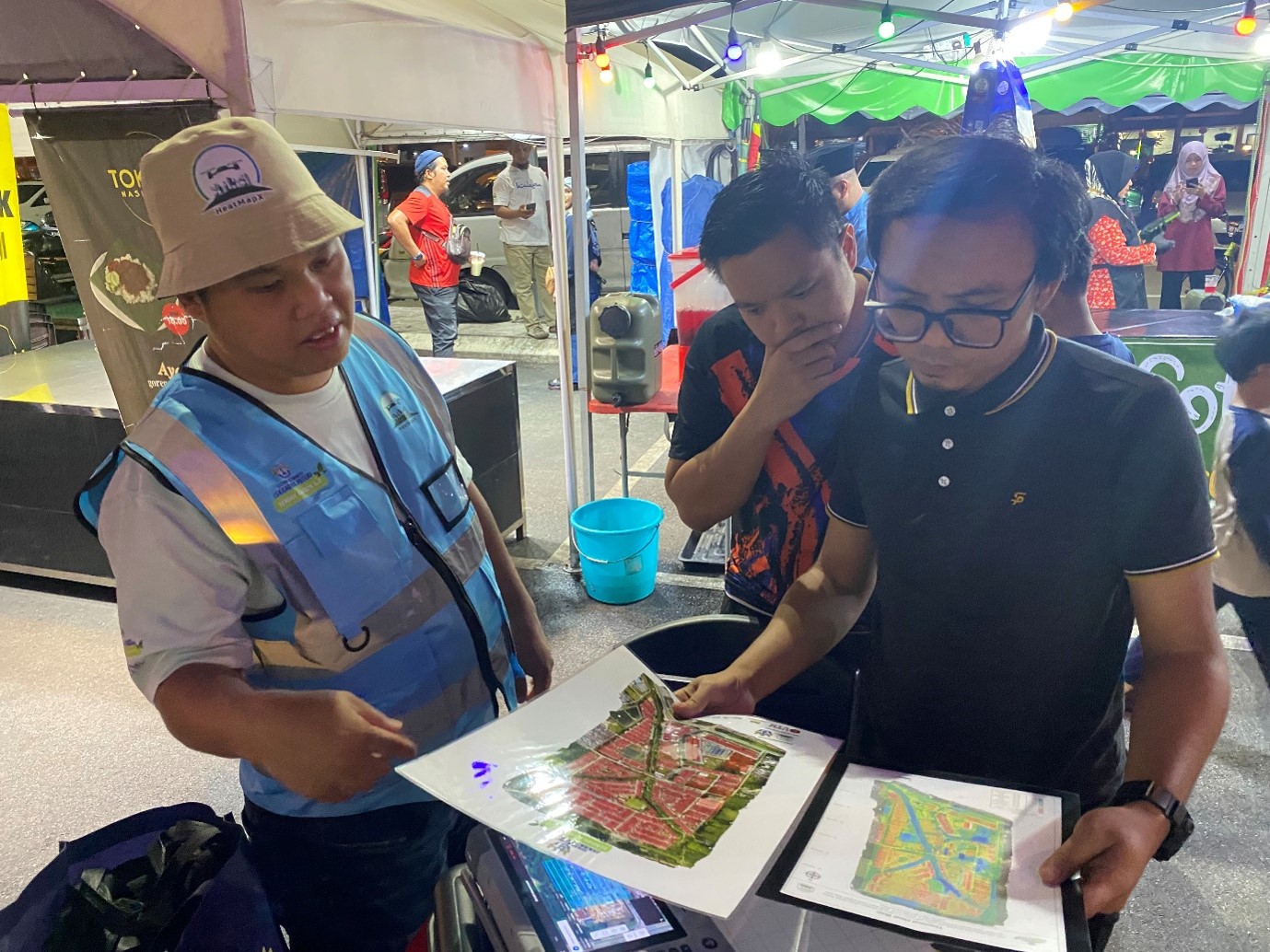
This pollution comes from heavy reliance on petrol-powered generators that vendors use just to keep their lightbulbs on. As an electrical engineer, I looked at this and thought: we can do so much better. These small-scale traders are the economic backbone of our neighbourhoods, yet they are breathing in toxic carbon monoxide every single week while spending their hard-earned profits on expensive, fluctuating fuel. This inspired my team and me at Universiti Teknologi Malaysia to step out of the lab and take action.
The Research Journey:
Our project, Pasar Malam Hijau 2.0 (Green Night Market 2.0), bridges lab-tested power systems with everyday community needs. In practice, my research involves swapping out loud, dirty petrol engines for portable, rechargeable battery packs running on advanced power inverters. To turn this into a truly modern solution, we integrated smart Internet of Things (IoT) technology. We developed custom mobile applications for Android and iOS alongside a centralized web dashboard, allowing vendors to track their real-time power levels right from their phones.
Taking this technology to the streets with a dedicated focus at Dataran Niaga Taman Pulai Indah has been an incredible journey. By organizing live demonstrations and technical masterclasses, we didn’t just hand over equipment—we built trust. We even partnered with local schools to host workshops, teaching over 50 young students how power inverters are built and operated. The immense real-world impact of this journey quickly caught national attention, leading our initiative to be showcased on major broadcasting platforms, including a live feature on Astro AWANI’s AWANI Pagi, national coverage by RTM, and regional highlights via Media Digital Johor.
While our work is rooted locally in Johor, Malaysia, the core issue is global. Street food culture and informal open-air marketplaces are vital economic lifelines for millions of people across developing nations. Yet, their heavy reliance on localized fossil fuels presents a massive, hidden barrier to urban health initiatives and global climate goals.
By cleaning up the energy footprint of these marketplaces, our project directly targets international sustainability, climate mitigation, and clean energy goals. We are creating a practical blueprint for low-carbon urban living that can easily be adapted by cities anywhere in the world.
The real-world impact of this initiative is incredibly clear. In the short term, we are giving night market traders immediate financial relief by eliminating their fuel costs, while giving visitors a peaceful, smoke-free shopping environment. Our long-term ambition is to integrate flexible solar options directly into the mobile inverter setups, creating a fully self-sustaining, zero-emission ecosystem. We want to prove that green technology isn’t just for luxury developments or massive industrial complexes—it belongs on our local streets, improving everyday lives and protecting our planet one night market stall at a time.
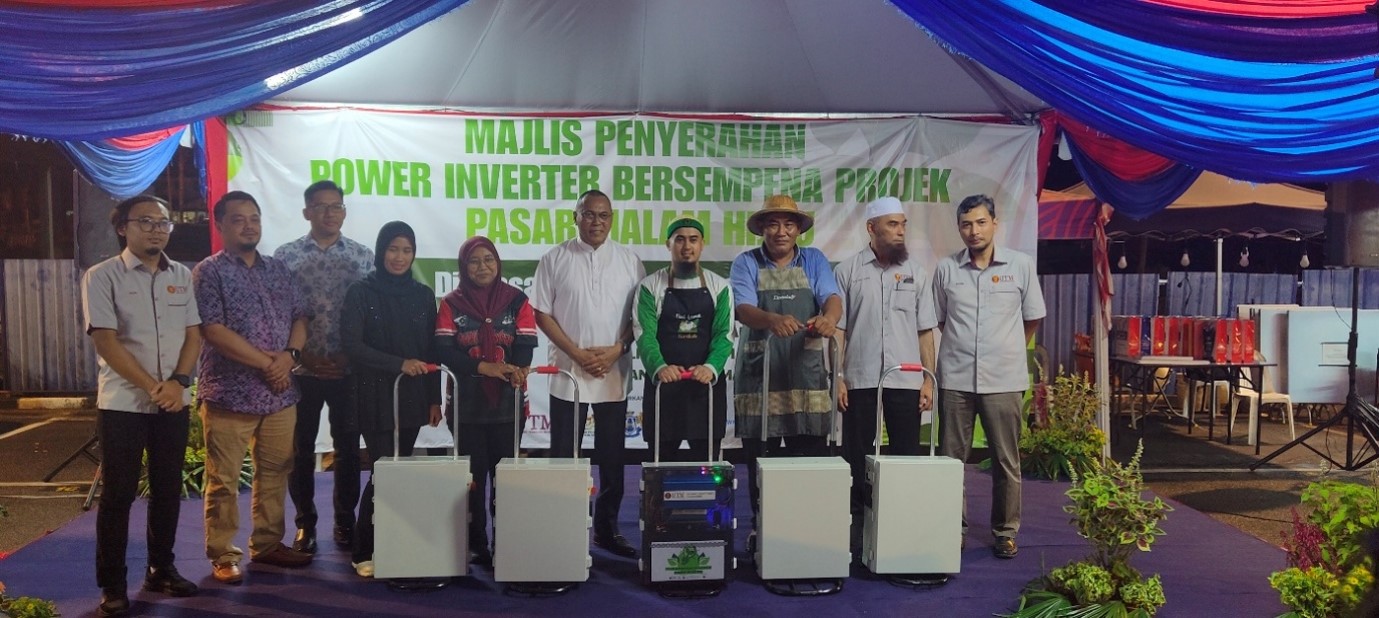
Collaboration Opportunities including how to work with Dr Kasri:
We know that grand environmental challenges cannot be solved in isolation. For this deployment, we have built amazing local networks involving municipal councils, community safety committees, and a passionate team of fifty “Southern Volunteers” who help us conduct field surveys on power loads. To maximize the technical depth of this project, we have also expanded our research across institutional boundaries, collaborating closely with experts like Ts. Dr. Zatul Iffah Abd Latiff from Universiti Teknologi MARA (UiTM) and Dr. Muhammad Hafiz Jahare from the International Islamic University Malaysia (IIUM). Financially, the project is highly backed—leveraging our local council grant with an additional RM30,000.00 from the Prototype Development Fund (PDF) 2025 to maximize our impact.
Moving forward, I am eager to expand this network internationally. I would love to connect with researchers across the World Technology Universities Network (WTUN) who specialize in urban renewable energy grid integration, smart city data analytics, or community-led sustainability projects. Whether you want to study the socio-economic impacts of green technologies or replicate this green marketplace model in your own country, our team is completely open to collaboration, data sharing, and joint research initiatives.
About:
Dr. Nur Faizal bin Kasri is a Senior Lecturer within the Faculty of Electrical Engineering at Universiti Teknologi Malaysia (UTM). Specializing in clean energy engineering and power electronics, his research focuses on translating laboratory innovations into scalable, high-impact green technologies that directly benefit grassroots communities, support micro-entrepreneurs, and advance real-world low-carbon urban development.
I am highly keen to connect and collaborate with researchers and institutions across the WTUN working on smart cities, data analytics for cross-university IoT energy systems, or urban low-carbon strategies.
Keywords:
Sustainability & Climate Action | Technology & Innovation | Societal Challenges & Inclusion
If your university is a member of the World Technology Universities Network and are interested in contributing to future editions of this blog, please contact Denise Whitehead wtun@bradford.ac.uk and a submission template will be shared with you.
You can find your institutional contact via this page and by clicking on your university’s logo: