

July 2026
Welcome to the latest edition of the WTUN newsletter: featuring a roundup of news, updates and events happening across the network.
Members are reminded that registration for the World Technology Universities Network Congress 2026 is open (deadline Thursday 20 August). Invitations were sent via the designated General and Operational Board members at your university. On behalf of our hosts, we look forward to welcoming you to Austria in November! (www.wtu-n.net/congress).
Below you will also find the second publication of the WTUN Research Blog submitted by Dr Nur Faizal bin Kasri, Senior Lecturer, Universiti Teknologi Malaysia. Read on for more about his team’s work on their project titled – Pasar Malam Hijau 2.0 (Green Night Market 2.0).
Finally, news from our members including semester abroad and PhD scholarship opportunities from Kalinga Institute of Industrial Technology, SAIT’s participation in the recent Canada-Baltics Education in Defence Partnership Mission and the university welcomes their new Vice-Chancellor and student success in Space AI at the University of Bradford!
REMINDER: If you would like to share news, updates, events or milestones via this newsletter, then please contact wtun@bradford.ac.uk.

WTUC2026 – Register Now!

‘Responsible Science: The Role of Higher Education for Shaping the Future’
This year’s theme brings together scholars, practitioners, and innovators to explore how universities can lead the transition toward a more sustainable and equitable world. Addressing the transformative power of renewable energies, artificial intelligence, and sustainability, the conference highlights higher education’s responsibility in driving research, fostering ethical innovation, and preparing future generations to navigate complex global challenges. Participants will engage in interdisciplinary dialogue, share forward-thinking practices, and co-create pathways for responsible scientific leadership that shapes a resilient future for all.
Congress sub-themes:
- Renewable Energy
- Artificial Intelligence
- Sustainability
View the programme here – www.wtu-n.net/2026-congress/programme
Register before 20 August – REGISTRATION
Meet us at EAIE 2026

Will your university be in Glasgow? Contact wtun@bradford.ac.uk to connect with Michael, Denise and fellow WTUN members!
We’re excited to invite all WTUN member colleagues to join us at EAIE 2026, where global minds in higher education come together to shape the future. This is a fantastic opportunity to strengthen our network, share innovative practices, and explore new avenues for collaboration.
Find us at the World Technology Universities Network Stand G58 in the exhibition hall.

SILENCING THE SMOKE: SHIFTING MALAYSIA’S ICONIC NIGHT MARKETS TO SMART, BATTERY POWER
Introducing Dr. Nur Faizal bin Kasri, Senior Lecturer, Universiti Teknologi Malaysia
Department / Research Area: Faculty of Electrical Engineering / Clean Energy Technology & Power Electronics
Email Contact: nurfaizal@utm.my
If you ever visit Malaysia, one of the first things you must experience is a pasar malam—our traditional open-air night markets. They are a beautiful sensory explosion: the sizzle of street food, the bright lights, and the chatter of communities coming together. But if you stand there for a few minutes, another less pleasant reality hits you. The air quickly fills with choking black smoke, and a deafening roar echoes down the street.
This pollution comes from heavy reliance on petrol-powered generators that vendors use just to keep their lightbulbs on. As an electrical engineer, I looked at this and thought: we can do so much better. These small-scale traders are the economic backbone of our neighbourhoods, yet they are breathing in toxic carbon monoxide every single week while spending their hard-earned profits on expensive, fluctuating fuel. This inspired my team and me at Universiti Teknologi Malaysia to step out of the lab and take action.
The Research Journey
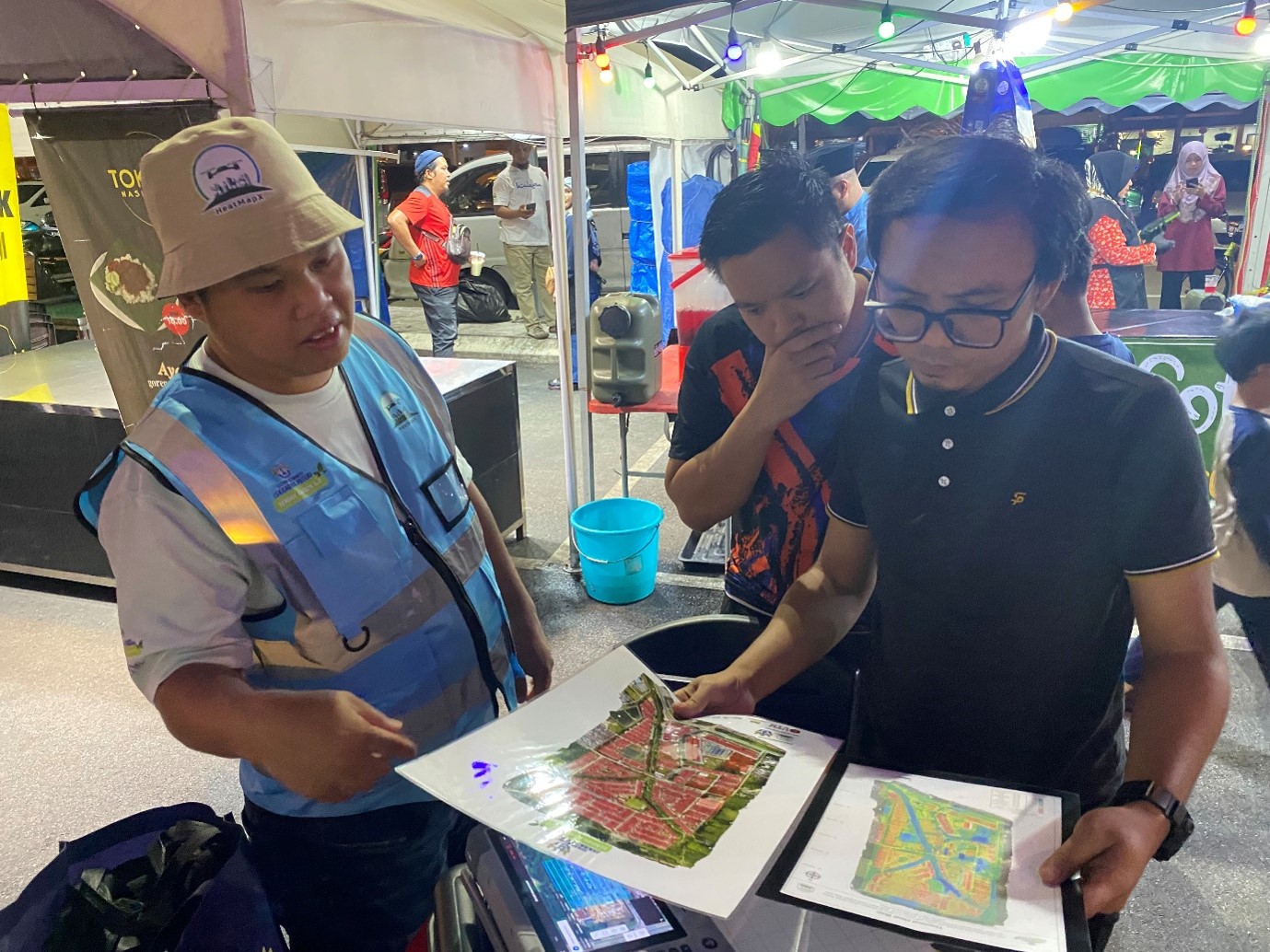
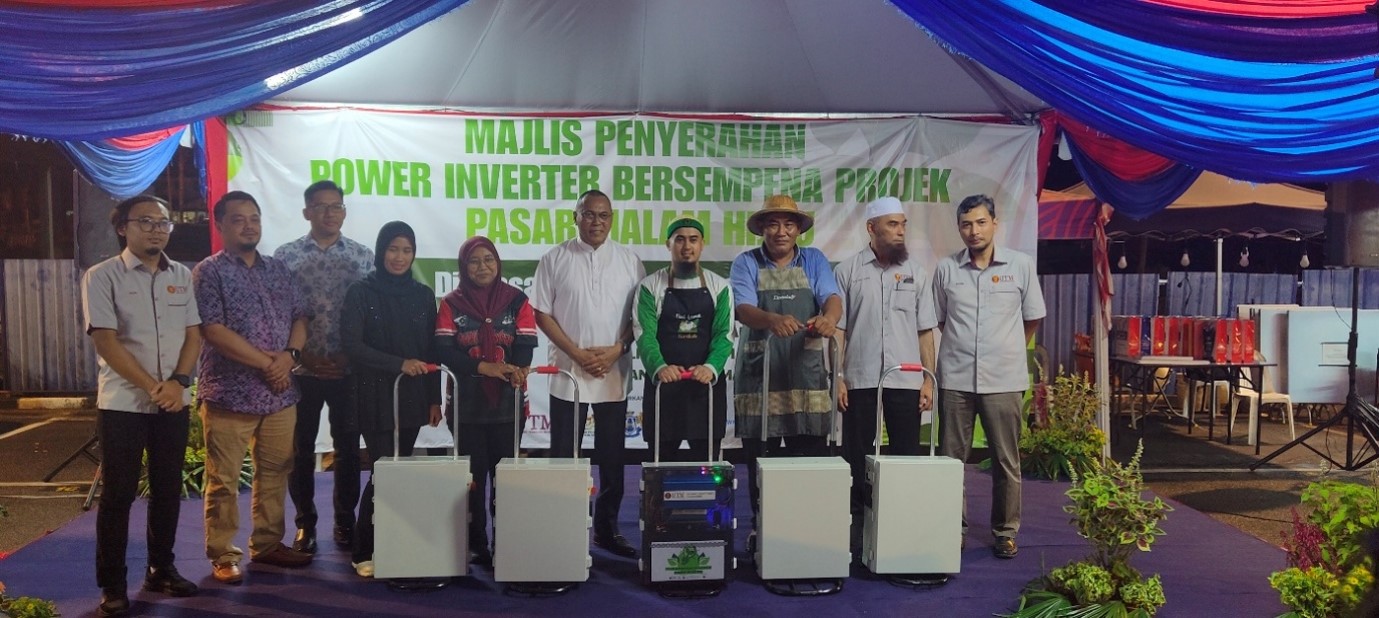
Our project, Pasar Malam Hijau 2.0 (Green Night Market 2.0), bridges lab-tested power systems with everyday community needs. In practice, my research involves swapping out loud, dirty petrol engines for portable, rechargeable battery packs running on advanced power inverters. To turn this into a truly modern solution, we integrated smart Internet of Things (IoT) technology. We developed custom mobile applications for Android and iOS alongside a centralized web dashboard, allowing vendors to track their real-time power levels right from their phones.
Taking this technology to the streets with a dedicated focus at Dataran Niaga Taman Pulai Indah has been an incredible journey. By organizing live demonstrations and technical masterclasses, we didn’t just hand over equipment—we built trust. We even partnered with local schools to host workshops, teaching over 50 young students how power inverters are built and operated. The immense real-world impact of this journey quickly caught national attention, leading our initiative to be showcased on major broadcasting platforms, including a live feature on Astro AWANI’s AWANI Pagi, national coverage by RTM, and regional highlights via Media Digital Johor.
While our work is rooted locally in Johor, Malaysia, the core issue is global. Street food culture and informal open-air marketplaces are vital economic lifelines for millions of people across developing nations. Yet, their heavy reliance on localized fossil fuels presents a massive, hidden barrier to urban health initiatives and global climate goals.
By cleaning up the energy footprint of these marketplaces, our project directly targets international sustainability, climate mitigation, and clean energy goals. We are creating a practical blueprint for low-carbon urban living that can easily be adapted by cities anywhere in the world.
The real-world impact of this initiative is incredibly clear. In the short term, we are giving night market traders immediate financial relief by eliminating their fuel costs, while giving visitors a peaceful, smoke-free shopping environment. Our long-term ambition is to integrate flexible solar options directly into the mobile inverter setups, creating a fully self-sustaining, zero-emission ecosystem. We want to prove that green technology isn’t just for luxury developments or massive industrial complexes—it belongs on our local streets, improving everyday lives and protecting our planet one night market stall at a time.
Collaboration Opportunities including how to work with Dr Kasri:
We know that grand environmental challenges cannot be solved in isolation. For this deployment, we have built amazing local networks involving municipal councils, community safety committees, and a passionate team of fifty “Southern Volunteers” who help us conduct field surveys on power loads. To maximize the technical depth of this project, we have also expanded our research across institutional boundaries, collaborating closely with experts like Ts. Dr. Zatul Iffah Abd Latiff from Universiti Teknologi MARA (UiTM) and Dr. Muhammad Hafiz Jahare from the International Islamic University Malaysia (IIUM). Financially, the project is highly backed—leveraging our local council grant with an additional RM30,000.00 from the Prototype Development Fund (PDF) 2025 to maximize our impact.
Moving forward, I am eager to expand this network internationally. I would love to connect with researchers across the World Technology Universities Network (WTUN) who specialize in urban renewable energy grid integration, smart city data analytics, or community-led sustainability projects. Whether you want to study the socio-economic impacts of green technologies or replicate this green marketplace model in your own country, our team is completely open to collaboration, data sharing, and joint research initiatives.
About
Dr. Nur Faizal bin Kasri is a Senior Lecturer within the Faculty of Electrical Engineering at Universiti Teknologi Malaysia (UTM). Specializing in clean energy engineering and power electronics, his research focuses on translating laboratory innovations into scalable, high-impact green technologies that directly benefit grassroots communities, support micro-entrepreneurs, and advance real-world low-carbon urban development.
I am highly keen to connect and collaborate with researchers and institutions across the WTUN working on smart cities, data analytics for cross-university IoT energy systems, or urban low-carbon strategies.
Keywords:
Sustainability & Climate Action | Technology & Innovation | Societal Challenges & Inclusion
If you are interested in contributing to future editions of this blog, please contact Denise Whitehead wtun@bradford.ac.uk and a submission template will be shared with you.

Kalinga Institute of Industrial Technology

KIIT expands its Global Faculty Programme, KIIT International Semester and PhD Opportunities
KIIT is expanding its Global Faculty Programme and welcomes expressions of interest from distinguished academics interested in teaching, collaborative research, joint supervision of doctoral students, curriculum development, and other forms of academic engagement. We would be delighted to explore opportunities for collaboration with faculty from your university.
KIIT is a multidisciplinary university with a strong emphasis on research, innovation, internationalisation, and industry engagement. We believe these initiatives offer an excellent platform to strengthen academic partnerships within the WTUN community.
If these opportunities align with your institution’s interests, I would be pleased to share additional information, application details, or arrange a discussion with the relevant colleagues at KIIT.
Contact: Tanya Sharma, WTUN Operational Board member for KIIT and Director, Partnerships and Research, International Relations. tanya.sharma@kiit.ac.in
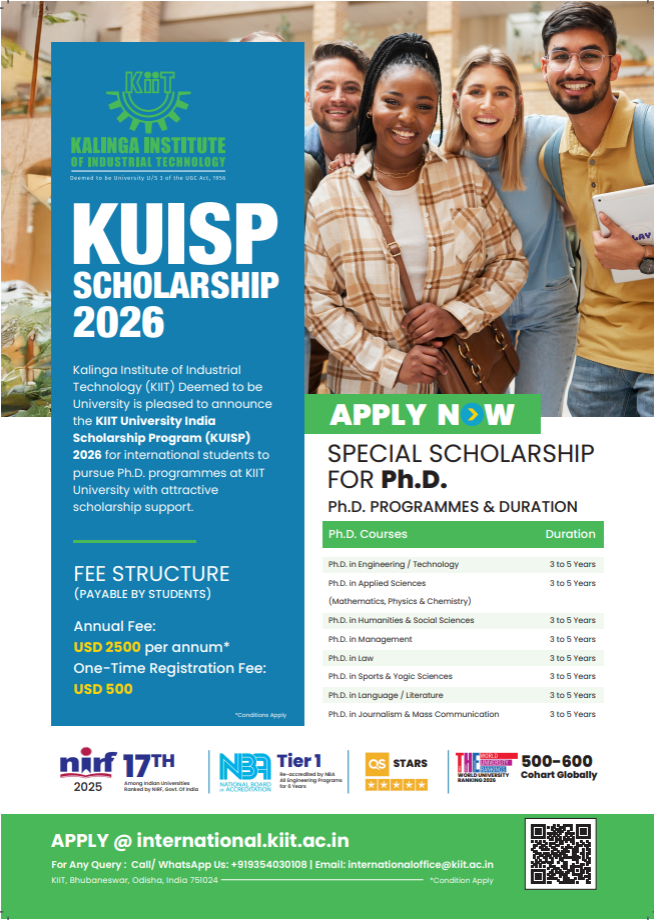
Introducing KIIT International Semester Scholarship Programme and KUISP Scholarship 2026
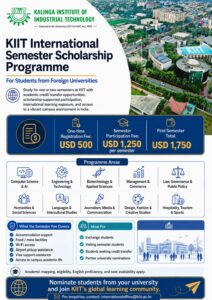
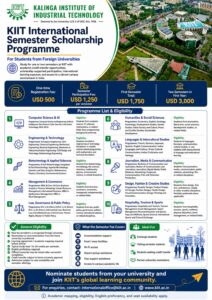
KIIT is currently inviting applications from outstanding candidates across a wide range of disciplines for its doctoral programmes. We would be grateful if you could share this opportunity with eligible students and recent graduates who may be interested in pursuing high-quality research in India.
Southern Alberta Institute of Technology

Applied Research and Innovation Services (ARIS)
SAIT’s Applied Research and Innovation Services (ARIS) recently participated in the Canada-Baltics Education in Defence Partnership Mission led by the Canadian Bureau for International Education (CBIE) in collaboration with the Trade Commissioner Service.
The mission brought together Canadian post-secondary institutions and counterparts across Estonia, Latvia and Lithuania to explore opportunities for collaboration in defence-related research, training and dual-use technologies, including artificial intelligence, materials, robotics, aerospace and unmanned systems.
As one of the Canadian delegates, ARIS connected with government officials, leading institutions and organizations across the Baltic region to explore opportunities for knowledge mobilization and collaboration. The mission helped recognize shared challenges and the need for international collaboration to address those challenges – further strengthening Canada-Europe partnerships.
Please reach out to the ARIS Interim Director and Grants Manager, Jodi David, Jodi.David@sait.ca to learn more about ARIS and/or discuss any partnership opportunities.
SAIT Colleague Recognised as a CIPS Fellow
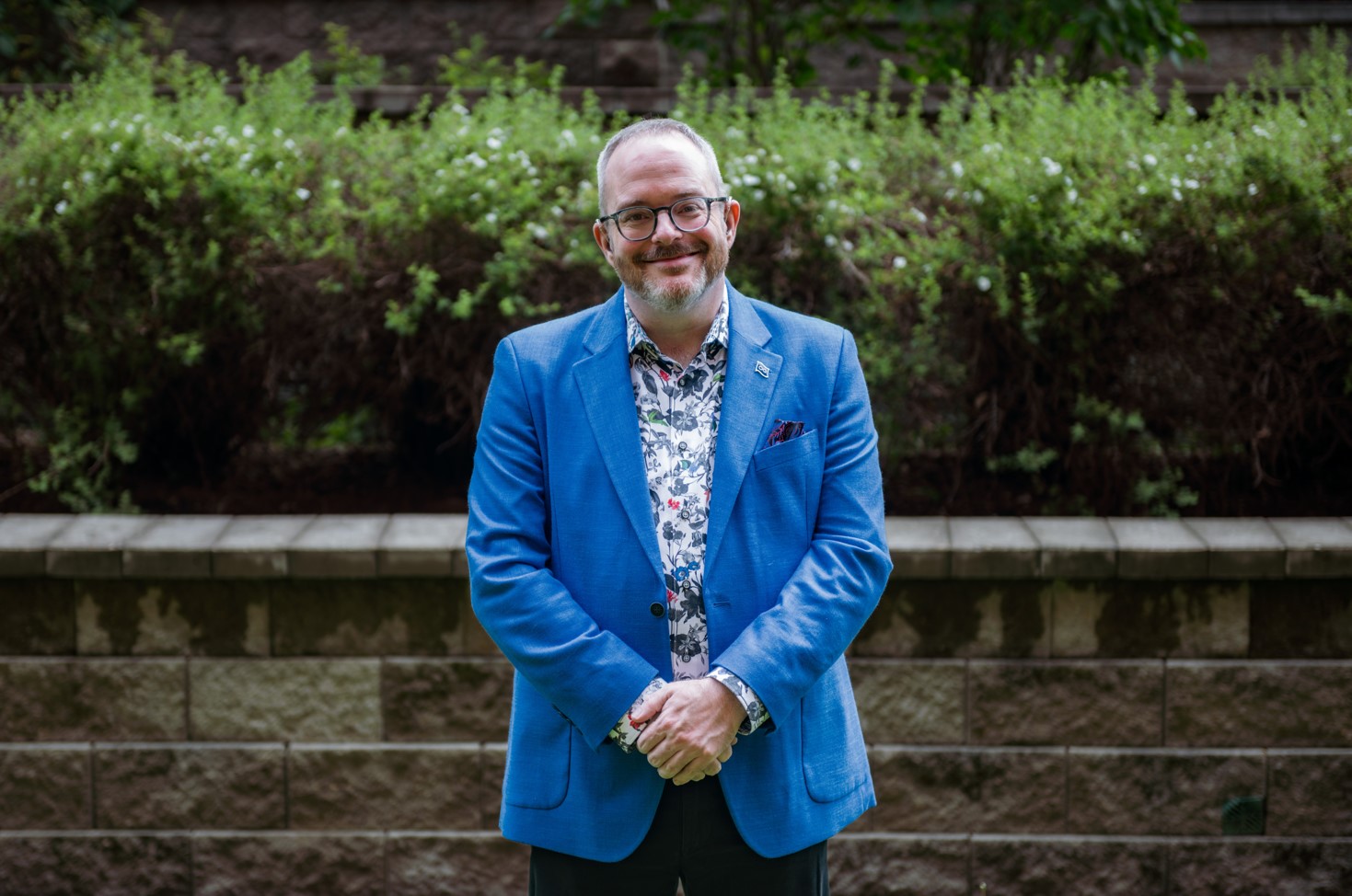
SAIT is pleased to recognize our esteemed colleague, Blake Kanewischer, Academic Chair in Academic Services, on being inducted as a Fellow of the Canadian Information Processing Society (CIPS),
The prestigious Fellow designation (FCIPS) recognizes individuals who have made significant contributions to the advancement of the profession, the ICT industry, or the adoption and application of information and communication technologies. Fellows are selected for their leadership, impact, and commitment to strengthening the profession and are called upon to serve as advisors and ambassadors for CIPS within their spheres of influence.
This recognition reflects Blake’s longstanding dedication to innovation, technology-enabled learning, and professional leadership. Through his contributions to education and his commitment to advancing the effective use of technology, Blake has demonstrated the qualities that the Fellow designation is intended to celebrate.
As a newly appointed CIPS Fellow, Blake joins a distinguished group of professionals who help shape the future of the ICT profession in Canada. The SAIT community congratulates Blake on this remarkable achievement and thanks him for the expertise, leadership, and vision he brings to our institution and the broader professional community.”
Read more about CIPS – Canada’s Association of Information Technology Professionals
Submission from Enda Morley (Academic Services)
University of Bradford
 The University of Bradford welcome new Vice Chancellor Professor Gillian Murray.

Professor Murray, who took up her new role on Monday, July 13 – the start of the University’s summer graduation week – has a strong track record in leading large-scale partnership programmes between universities, industry and government.
She is a former member of Scottish Enterprise, Scotland’s national economic development agency, and was previously involved in economic regeneration across the Liverpool City Region and the Northern Powerhouse.
She joins Bradford in its 60th anniversary year from Heriot-Watt University, where, as Deputy Principal, she led enterprise and business engagement strategy and helped double research and innovation income. She is the University’s 9th permanent Vice-Chancellor, taking over from Professor Nick Braisby, who served as Interim Vice-Chancellor following the retirement of Professor Shirley Congdon in December, having been in the role since 2019.
The WTUN welcomes Professor Murray to the University of Bradford and looks forward to working with her.
View the full story – https://www.bradford.ac.uk/news/archive/2026/vice-chancellor-signals-new-chapter-for-university-of-bradford-.php
Space AI students win national satellite design awards
Congratulations to students from our Bradford-Renduchintala Centre for Space AI who have won two awards at the UK Students for the Exploration and Development of Space (UKSEDS) Satellite Design Competition.
Kelvin Shek, Wilson Lui, Jack Sutton and Thong Tran received the Best Satellite and Best Outreach awards for their innovative 3U CubeSat design at the competition finals, hosted by Airbus Defence and Space in Stevenage.
Competing as Team BEARS, the students impressed judges with a satellite project that combined advanced technologies including cloud sensing for environmental mapping, Earth observation imaging, satellite attitude control and onboard data handling systems.
The Best Satellite award recognised the team’s successful achievement of their mission objectives, while the Best Outreach award celebrated the group’s effective public engagement programme linked to the project. The national finals brought together teams from five universities, giving students the chance to present their designs and engage with experts from across the UK space sector.
The UKSEDS competition challenges students to develop nanosatellite and CubeSat concepts for practical space applications while following the same systems engineering approaches used by professional aerospace organisations. Our award-winning project was supported by academic mentors from the Bradford-Renduchintala Centre for Space AI, including Dr Muhammad Ali, Dr Viktor Doychinov, Dr Vuong Mai, Professor Raed A. Abd-Alhameed and Professor Rami Qahwaji.
Professor Rami Qahwaji, Director of the Bradford-Renduchintala Centre for Space AI, said: “The UKSEDS Satellite Design Competition gives our students a real-world platform to innovate using professional aerospace standards.”
“The Bradford team’s 3U CubeSat project demonstrated exceptional technical skills, creativity and teamwork. These awards are a testament to the talent of our students, the quality of our teaching and research, and the supportive environment we create to help them succeed.”
Through the competition, students gained hands-on experience in satellite engineering, systems integration, testing, project management and multidisciplinary teamwork, helping to prepare them for careers in the growing space industry.
The technologies developed as part of the project have potential applications in Earth observation, environmental monitoring, disaster management, autonomous satellite operations and future small satellite missions.
The project will also support future STEM outreach activities through the Bradford-Renduchintala Centre for Space AI, helping to inspire the next generation of engineers and scientists while raising awareness of how space technology can help address global challenges.
Read more about the Bradford-Renduchintala Centre for Space AI
Do you know someone in your university who would be interested in this newsletter? Forward the email to colleagues or share the link with your networks.
All members are invited to contribute to this newsletter through their Operational Board Member (found here). Please contact your Operational Board member with stories or events which will be of relevance to the shared vision and commitments of the WTUN and its members, inspiring opportunity for engagement on commonalities, sharing knowledge, or collaboration.
All calls for content can be shared with the WTUN Secretariat at wtun@bradford.ac.uk.
To discuss joining the World Technology Universities Network, please contact the WTUN Development Manager:
Denise Whitehead
Email: wtun@bradford.ac.uk