

Is GenAi safe to use in research?
Introducing Dr Akiko Ueno, Associate Professor of Marketing, University of Bradford,
Department / Research Area: Human Technology and Innovation Research Cluster, Faculty of Management, Science and Engineering
Email Contact: a.ueno@bradford.ac.uk
In April 2025, I attended an online workshop on generative AI led by Dr Shubin Yu. I thought I was reasonably knowledgeable about research methods and digital technologies. A few hours later, I found myself wondering: “Am I working in the Stone Age?”
I am an Associate Professor in Marketing and Head of Research Cluster: Humane Technology and Innovation at the School of Management, researching how emerging technologies affect people’s lives. Seeing how AI could change research practices I had spent years developing was exciting and slightly unsettling. I wanted to learn more, and to give other researchers the opportunity to explore these tools critically.
One question stayed with me: how could we use them while maintaining trust in our research?
Generative artificial intelligence, or GenAI, creates content such as text, images or computer code in response to instructions. Familiar examples include ChatGPT. Other tools help researchers explore published studies, work with data or build applications. Some use external online services; others run on an organisation’s own computers. Their capabilities and safeguards differ.
For me, safe use depends on the task, the information shared and whether the researcher can check the result. A tool suitable for improving a plain-language explanation of published research may be unsuitable for handling confidential interviews.
Where the dangers lie
My first concern is accuracy. AI systems have improved, and checking external sources can reduce factual errors. However, a study published in Nature in April 2026 explains why even advanced language models can still produce plausible but incorrect answers, often called “hallucinations”. Reliability varies with the tool and the task. In research, misrepresenting what a real study found can be as consequential as inventing a reference. Checking means reading the original source and considering whether it supports the claim.
Privacy matters just as much. Someone who agrees to be interviewed about a difficult experience has entrusted their story to the research team. That does not automatically give permission to upload it to an external AI service. Researchers need to establish what participants agreed to, where their information will go and whether the tool is approved for that use. Running a model locally still requires safeguards.
What GenAI could help us do
In my own research, I have scheduled ChatGPT to search each week for new studies on my research topics. I ask for summaries of their methods, findings and limitations. The aim is to keep up with developments and identify papers worth reading closely. I still need to read the original articles to judge their relevance and check what the studies actually show. Writing support may also reduce language barriers. A researcher working in an additional language could use AI to improve clarity while checking that the meaning remains intact. It could help suggest a plain-language explanation of a complex idea, making research easier to discuss with the people it concerns. There are possibilities for practical tasks, too, such as creating a chart from research data. The researcher must check that the chart represents the data accurately and uses appropriate labels and scales. Time saved is valuable only if the result is reliable. I would want any efficiency gains to create more room for careful interpretation and discussion.
I am also concerned about bias. AI outputs can reproduce stereotypes or overlook perspectives poorly represented in their training material. In research about people’s lives, this could mean missing experiences that challenge the most familiar account. Researchers need to consider whose voices may be absent and return to the evidence.
Responsibility remains with us. We need to explain how AI contributed to the work and follow the relevant university, funder and journal requirements. The UK Research Integrity Office’s guidance offers a useful starting point.
Putting these questions into practice
My experience in 2025 prompted me to invite Shubin to Bradford. With Dr Rachel Shrimpton and Dr Takao M. Maruyama, and support from RAPID funding, I organised a three-day workshop, How to Legitimately Use Generative AI in Research, from 23 to 25 June 2026. Shubin, of HEC Paris, led the sessions for participants joining in person and online.
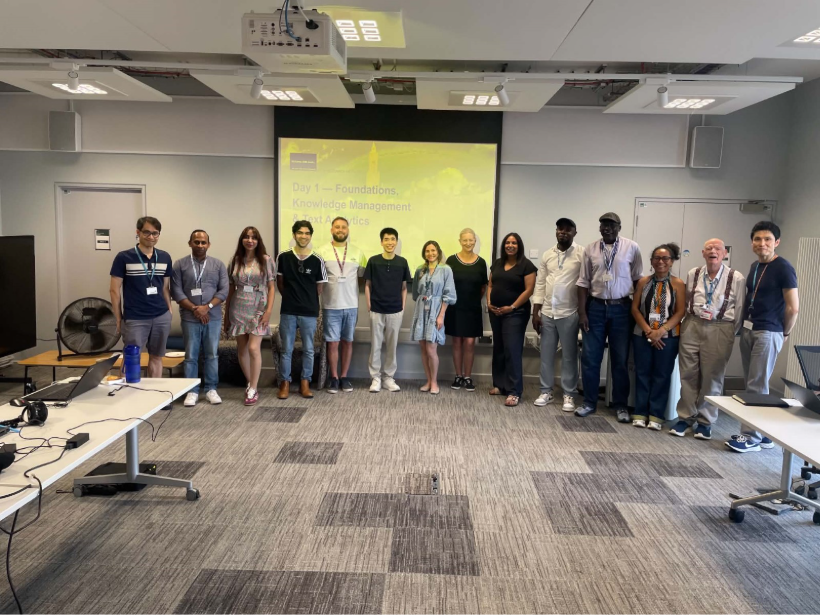
More than 600 people registered from the UK and overseas. Shubin delivered the workshop without a teaching fee, helping us extend access. The programme connected practical work with discussion of responsible use, covering literature discovery, analysis of text and data, AI-assisted interviews and assistants that carry out sequences of research tasks.
Of the 100 people who completed all eight confidence questions before and after the workshop, 89% reported increased overall confidence. I find that encouraging, although it measures how people felt immediately afterwards. It does not establish whether their research practice improved over time. The workshop recordings are available online so others can explore the sessions. This project sits alongside my wider research into digital poverty and differences in how university students use GenAI. It raises a related question for me: who has the resources and support to use these technologies well? Making training available beyond a single event is one practical response.
That question I asked myself in 2025 has become a reason to keep learning. I want to use GenAI where it helps, while remaining able to explain and defend the research decisions behind the results.
Collaboration Opportunities including how to work with Dr Akiko Ueno
I am interested in developing interdisciplinary partnerships that bring together expertise in human-centred technology, digital inclusion, wellbeing, and innovation. In particular, I welcome opportunities to collaborate on research projects and funding applications where my expertise can add value, working alongside researchers, industry partners, policymakers, and community organisations to co-design solutions to real-world societal challenges.
WTUN researchers who are developing research projects, funding applications, or collaborative initiatives and are seeking expertise in Human Technology and Innovation are welcome to get in touch. I would be pleased to contribute to relevant research projects and funding applications where my expertise can add value, and can also facilitate connections with researchers from the Human Technology and Innovation research cluster.
Impact & Looking Ahead
My research aims to support the development of more inclusive and accessible technologies that help reduce digital inequalities and improve wellbeing. By generating evidence on how people interact with technology in different contexts, the research can inform policy, practice, and innovation that better serve diverse communities. My future ambition is to support the growth of researchers within the Human Technology and Innovation cluster, particularly early career researchers, by fostering international collaborations, creating opportunities for interdisciplinary research, and supporting ECRs in developing their research profiles and professional networks. I am particularly interested in building a supportive and inclusive research community that enables members to maximise the impact of their work while contributing to global research partnerships.
About
Akiko Ueno (PhD) is an Associate Professor of Marketing, specialising in the intersections of consumer wellbeing and the impact of emerging technologies, and she has recently completed a research project into Digital Poverty in the UK, funded by the British Academy. Her research has been disseminated through leading academic outlets, including but not limited to the British Educational Research Journal, International Business Review, Journal of International Marketing, and Technological Forecasting & Social Change.
www.bradford.ac.uk/staff/aueno
Keywords:
GenAi | Emerging technologies | Inclusive technologies | Digital exclusion | Wellbeing
If your university is a member of the World Technology Universities Network and are interested in contributing to future editions of this blog, please contact Denise Whitehead wtun@bradford.ac.uk and a submission template will be shared with you.
You can find your institutional contact via this page and by clicking on your university’s logo: