Tag: BC Scholarship Prize

Meet the Recipient of the WTUN BC Scholarship Prize 2025

Profile photo of Dhanushi Rodrigo
Dhanushi Rodrigo, doctoral researcher at Atlantic Technological University

The WTUN Secretariat had the opportunity to speak with Dhanushi Rodrigo, a doctoral researcher at Atlantic Technological University (ATU), to explore her research journey and what it means to be recognised with the WTUN BC Scholarship Prize. 

Dhanushi’s path to her PhD is rooted in a diverse academic and professional background, beginning with business qualifications and an MBA, and evolving into a deep commitment to sustainability. Now undertaking doctoral research at ATU, she focuses on sustainability learning within supply chain networks, an area she believes is key to driving long-term, meaningful change. 

Her work stands out for its innovative approach to integrating human and technological elements in sustainability education. From applying analytical tools like NVIVO and R Studio to co-leading AI-driven projects such as CropConnect, which won 1st Place in the 2025 Student Competition, Dhanushi’s research bridges theory and practice in ways that benefit both industry and community. 

This year, her application impressed the WTUN BC Scholarship Prize assessment panel for its originality, relevance, and potential to deliver real-world impact. The panel also highlighted the strength of her industry endorsement, reinforcing the value and applicability of her work beyond academia. 


Could you tell us a little bit about your academic journey and what led you to your PhD and your current research? 

Atlantic Technological University Logo

My academic journey began in business and professional qualifications, earning both ACCA and CIMA credentials alongside an MBA from the University of Sri Jayewardenepura, Sri Lanka. Professionally, I previously worked in sustainability roles across logistics, corporate functions, and sustainable finance. Whilst the concept of sustainability had intrigued me since childhood, seeing less fortunate people in communities and the need for greener environments, the practical exposure from work and college as a young adult inspired me to undertake a PhD and contribute to research in the emerging sustainability space. I am now a PhD researcher at Atlantic Technological University focusing on sustainability learning within supply chain networks as I believe education is important for long-lasting, positive change. 

The assessment panel agreed that your project had demonstrated undertaking cutting-edge challenge led research with direct benefits to people and society, which can include a focus on technology. Can you tell us about the technological solutions and developments that you are using in your research? 

My research studies integration of human and non-human elements in sustainability learning. This research findings hope to unveil knowledge structures including those pivoted on technology which supports sustainability education across the wide array of actors which play a huge role in our economies, from large corporations to smaller-scale farmers and members of the community. I also apply certain technological tools in my analysis of research findings such as Biblioshiny, R Studio, VOSViewer, NVIVO, and SPSS. In the future, I hope to possibly learn and leverage on Natural Language Processing (NLP) techniques for my research. Beyond my core PhD work, I have co-led projects like CropConnect, which recently won 1st Place in the 2025 WTUN Student Competition. The idea delves on leveraging AI to bridge generational knowledge gaps in Irish farming communities. Additionally, me and a peer colleague are working on research applying machine learning techniques to examine smart mobility and EV adoption patterns in Ireland, demonstrating how data-driven technologies can inform sustainable policy. 

How did you hear about the prize and what made you apply? 

I learnt about the prize through my supervisors, Gabriela and George, who were encouraging me to apply. The award’s focus on recognising innovative, challenge-led research resonated deeply with my own research. Applying was a great step to share my work on sustainability learning and to highlight its benefits to both industry and community stakeholders. 

How will being awarded this prize impact you and your work? 

This recognition will not only enhance the visibility of my research but also open doors to new collaborations across the WTUN network and beyond. It will serve as a strong platform to engage with specially with policymakers and industry.  

How do you envision the future of this project and where do you hope this project will take you? 

I see this project evolving into a framework for sustainability learning that is both academically sound and practically applicable. My aim is to showcase importance of both people and technology integration to facilitate learning and therefore, enable faster adoption of sustainable practices. Ultimately, I hope to position the research as an enabler towards sustainability implementation founded upon understanding of what sustainability means as instilled through the knowledge learnt as opposed to relying on compliance approaches where true learning will not reflect and therefore changes may not be long lasting. 

What advice would you give to aspiring individuals who are considering a PhD? 

A PhD is as a lot about attitude and approach to life. Most often, PhD life will make you remember the quote ‘when life gives you lemons, make lemonade’. The journey will be challenging but rewarding. Be prepared to develop a broad skillset, from research methodologies to leadership and communication. Learn as you go but enjoy the process, both the ups and the downs. Engage with initiatives outside of your own PhD work such as WTUN or college initiatives as these will help personal development. Most importantly, see your work as part of a bigger picture, as your research will contribute to meaningful change. 

This is your second success in a WTUN Competition. You and a peer from ATU won first prize in the Student Competition earlier this year too. What value have you found in taking part in these network activities? 

WTUN activities have been invaluable in fostering collaboration and connecting with like-minded researchers from around the world. These platforms have allowed me to gain feedback from diverse audiences and co-create solutions with peers from different disciplines. The exposure to global sustainability challenges has enriched my own work and encouraged me to think both locally and globally. It is also a testament to our work and external validation that we are headed in the right direction. 

This year, our annual congress will discuss the theme “The ‘GLOCALISATION’ Functional Role of Higher Education from Local to Global”. From your own research into sustainability education advancement methodologies, can you speak to the role of Higher Education Institutions to foster sustainability in their students and communities? 

Higher Education Institutions have a unique position as both knowledge creators and community influencers. They can embed sustainability across curricula, empowering and ensuring that graduates enter the workforce with the skills and mindset to drive change. Equally, they engage in partnerships, scaling best practices globally. When HEIs adopt a “glocal” approach, tailoring global sustainability principles to local realities and challenges, they empower both students and surrounding communities to become active agents of positive change. 


 Learn more about Dhanushi’s work here:

Meet the Recipient of the WTUN BC Scholarship Prize 2024

WTUN Secretariat had the pleasure of speaking with Nadiia Sadova to find out more about her research and what it means to be awarded the WTUN BC Scholarship Prize

Nadiia Sadova, PhD Candidate at University of Applied Sciences Upper Austria

Currently undertaking her doctoral degree in Technical Sciences (Dr. tech.) in Biophysics at WTUN member university, the University of Applied Sciences Upper Austria (FHOOE), Nadiia’s academic career began by studying publishing and editing. Motivated by an interest in biology, she returned to higher education at the University of Applied Sciences Upper Austria to study Food Technology and Nutrition. Nadiia’s current research interests include immunoassays for inflammatory and stress biomarkers and intestinal function and oxidative stress in Drosophila melanogaster (Common fruit fly).

Among this year’s entries, Nadiia’s entry was highly regarded by the assessment panel who agreed that her application and work best demonstrated a commitment to cutting-edge, challenge led research which will have direct benefit to people and society. The panel also noted the accompanying endorsement from an industry expert.


Could you tell us a little bit about your academic journey and what led you to your PhD and your current research? 

At school, I loved biology and maths. I was interested in biology and attended extracurricular biology-related clubs and competitions. Over time, I drifted away from science and began studying linguistics and writing, eventually completing a Masters in Publishing and Editing. My childhood interest in biology stayed with me and I hoped to one day study something biology related. When I returned to university studies, I thought strategically about my choices and looked for a biology-related course that would lead to a profitable profession. I chose a degree in Food Technology and Nutrition. The study of molecular biology in this course led me to my current research in intestinal health.  

When I started the course, I never imagined I’d end up in research but as I worked on my bachelor and master theses, established laboratory processes alone, and solved variousuniversity of applied sciences upper austria research questions, I realised I loved it. At the end of my master thesis, I asked my supervisor, Professor Dr Julian Weghuber, if I could continue my research as a PhD student. The programme was competitive, but I was lucky and was accepted as a doctoral student.  

Whilst my previous studies in linguistics and writing don’t seem directly related to my work now, the skills I learned are still valuable. These previous experiences support me in structuring papers, organising my thoughts, and writing for scientific publications. Before my second high education I used to work as an editor and later chief editor of a medical magazine, dealing with natural science topics like nutrition. 

Can you tell us about the technological solutions and developments that you are using in your research?

I work mainly with Drosophila melanogaster, also known as fruit flies, which are those tiny pests that appear in the kitchen when fruits aren’t put away. For scientists, they are a beloved research model organism, especially in genetics. They are easy to cultivate, are relatively low cost, reproduce quickly, and are very flexible to varying conditions. They also have a similar intestinal physiology to humans. Although, their intestines are simpler, they are still an effective comparable model and a good basis for studying the effects of compounds on the intestines. However, a lot of research topics, specifically nutrition and intestinal research, are unable to utilise the Drosophila melanogaster to their full potential because of their relatively small size.

Normally, the investigation of pharmacokinetic characteristics of a chemical such as its absorption rate is carried out through plasma samples. For example, a human consumes half a cup of glucose solution and an hour later a blood sample is taken and assessed to identify how much glucose is absorbed. Comparing a human’s digestive tract with that of a small fly can include obvious challenges. You cannot take a syringe and draw a sample from a fly and, if that were possible, the amount drawn from a fly is so small that you would encounter several analytical issues, such as limit of detection. I work with bio active compounds, something most often derived from plants, which are usually present in such low concentrations in our food that if you decrease it down to the fly scale, it’s almost impossible to trace. My biggest challenge was how to assess this absorption rate and how much of the consumed compounds are taken in whilst using this tiny fly as a model organism. 

Nadiia at work in the laboratory.

To overcome this, I came up with the compound retention methods, abbreviated to CORE. In this method, I used a tracing dye to look at how much of the compound is not absorbed and passes through the digestive tract, rather than how much of it is absorbed. To do this, a precise dose of non-toxic non-absorbable tracing dye is given to the flies, so we can investigate the absorption, distribution, metabolization, and excretion (ADME) parameters of the compounds. Consuming 100 milligrams of something does not mean your body will make use of all 100 milligrams and having an effective and accessible model to evaluate this can enhance the future development of medication and the development of food and food supplements. 

Currently, this research is done in clinical studies with humans or mammal model organisms, most often rats or mice. My method aims to provide a cheaper and quicker model organism. The study using this CORE method has recently been published in a peer-reviewed journal, Biomedicine and Pharmacology [1]. 

Speaking of the other cutting-edge technologies, I used Luminex-based technology to complete mRNA multiplexing for mRNA quantification, which allows scientists to quantify multiple genes in the same sample simultaneously. The standard method for mRNA quantification is using a quantitative polymerase chain reaction (qPCR) test. This technique can require multiple tests for multiple genes and larger sample sizes. Using Luminex-based technology, I was able to complete mRNA quantification for multiple genes from a single sample. Up to 50 genes can be tested in two days using this process, saving time and resources. To obtain the same results would take me around nine to ten working days through the qPCR method. This technology is relatively new and isn’t widely applied. I hope that soon it will be used more widely, lessening the resources and costs involved in utilising it. Sustainability is hard to achieve in laboratories. Quantifying multiple genes from a single test will save on equipment use and plastic costs, too. 

How did you first hear about the WTUN Brian Cantor Scholarship Prize and what made you apply?

At University of Applied Sciences Upper Austria, we have the Doctoral College Initiative, where all doctoral students can learn subjects like ethics and law, independent of the specialist topic of their PhD. The head of this initiative, Professor Dr Katherine Gundolf contacted me, informing me about the opportunity, and suggested that I apply for the prize. I was also encouraged to apply by senior colleagues. These colleagues had only heard about my work briefly through a few presentations but believed in my research and found it interesting. Their encouragement gave me the confidence to apply and that others might find it interesting too. 

What impact do you think being a recipient of this prize will have for you and your work?

Nadiia completing analytical work in the laboratory.

The experience of my work being seen and evaluated by others is valuable. This prize has given me confidence that the topic I am working on is meaningful, not just for me. Being acknowledged is good for the mental health of PhD students generally, who often welcome a boost of support for their work. I strongly believe that research is a field of work where internationalisation and exchange experiences are of crucial importance. The idea of a university network where people can exchange ideas and work is fantastic, in my opinion. I was participating in a short academic exchange when I heard the news that I had been awarded this prize. 

The main impact of this prize is that it will enable me to visit with other research groups working in my field. The work in the Drosophila melanogaster field is unique and each laboratory does things in their own way as there is no unified standard to guide their handling. Visiting other research groups is valuable, allowing me to learn and gain inspiration from the solutions of others. It also helps to spread this experience, allowing, for example, younger generations of bachelor or master students to work with this model.  


What are your hopes for the future of your research and where do you envision your doctoral degree will take you?

The end of 2024 signals the end of the funding period for this project. This project was supported by two Austrian organisations; Josef Ressel Centre for Phytogenic Drug Research and FFoQSI and I have until the end of the year to finalise some of my findings. I hope that the existing project will be prolonged or transformed under a different framework. 

As for the future, I love science and I hope I will continue to work in research. I want to dedicate more time to the research of bioavailability and bioactive compounds to better understand what makes some substances more favourable in our guts than others. Why do we absorb this and not that? Can we make our bodies absorb certain compounds and not just let them pass through?  

We have learned how to extract valuable compounds from nature and to sell them as vitamins and supplements, but in very few cases do we understand how much of it is used by our bodies and how these interact with everything else we consume. For example, some vitamins require the presence of certain fats to be well absorbed. Diets which restrict the consumption of certain food groups could also impact uptake of certain compounds. I hope to get a chance to investigate these details in future research and I think Drosophila melanogaster make great accomplices in this field of work. 

Research into intestinal health and bioavailability of substances conducted by our lab is also related to industry projects. It’s great to see that companies are not just interested in producing supplements, but also in understanding how these supplements work. I think it’s important for applied sciences to work together with industry and enable industry to remain science based. 

What advice would you give to individuals who aspire to undertake a PhD? 

If you want to do it, go for it. Never stop being curious.  


 Learn more about Nadiia’s work here:

Read more:

Learn more:

PhD Candidate from Coventry University awarded inaugural Brian Cantor Scholarship Prize

WTUN Secretariat had the pleasure of speaking with Theresa Heering to find out more about her research and what it means to be awarded the WTUN BC Scholarship Prize

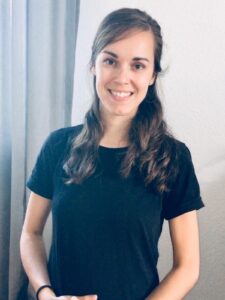
Originally from Germany, Theresa first studied Human Movement Science at undergraduate level. Currently a Cotutelle PhD student at WTUN member Coventry University, UK and Deakin University, Australia, the title of her research is ‘The increased prevalence of childhood anterior cruciate ligament injuries – Identifying those at risk’.

Among all proposals, Theresa’s application to the BC Scholarship Prize was highly regarded by the assessment panel who each noted that it “demonstrates global collaboration and aligns with the SDG goals and WTUN vision” and that the accompanying endorsement from industry and academics at both institutions is “indicative of the quality and potential impact”.


Could you tell us a little about your research and what made you pursue this area for your PhD?

During my undergraduate degree (in Germany),I had the opportunity to do an internship with my now supervisor in Australia. Through this and work experience prior to starting my PhD, I had an insight in to the areas she was working on and where our shared interests were. My PhD journey started in 2020 which was a challenge in itself, delayed from January to September due to Covid.  Restrictions also meant that we couldn’t do anything in the lab or in-person.Coventry University

I was just really interested in how to improve, or prevent injuries, because they have a major impact on one’s life. Sources such as the Olympic committee (IOC) have published a consensus statement on prevention, diagnosis and management of paediatric anterior cruciate ligament (ACL) injuries. We spoke with experts from different sources and found that they were reporting seeing many more injuries now in young children. It was by speaking to different sources and hearing similar reports that made us think, maybe we need to investigate that a little bit further.

You said that your research has consisted of two phases, could you explain how you approached phase one and where your focus is now?

When we first saw that there was a pattern of increased incidence of children presenting with ACL injuries we decided to investigate further. Due to the constraints of Covid-19 restrictions, we decided to first conduct a systematic review to see what was out there already on this subject. After this systematic review we then looked at specific risk factors that could predispose someone to an injury like an ACL injury. The review was a bit inconclusive and so we wanted to dig deeper into why this was and get expert opinion on why the literature that we needed wasn’t available.

Your chosen area of research has received a lot of positive feedback from experts in the field, that must be reassuring whilst working towards your PhD?

I have spoken to experts from a number of different regions including North America, Europe, Japan and Australia. Most of (the experts we spoked to) were saying similar things, that they were seeing increasing numbers of ACL injuries in children. I talked to a couple of surgeons who mentioned that when they started their practice they would operate on older young people, 15 years of age etc but that in the last number of years they’ve seen much younger patients with these injuries, children as young as 5 in some cases.

When you imagine someone as young as 5, with their whole lives ahead of them, an ACL injury is going to impact their overall well being as the knee is used for everything – walking, cycling and being active. This is why this areas is so interesting to me and why now in phase two, my focus is to try and find a way to identify children as early as possible, to be putting them into intervention programmes and making sure that they have good movement, not getting injured. There is not proper strategy for this intervention in place at the moment- what to do, what to look at.

It was really reaffirming to have the expert interviews say that yes, there is this gap and to have others outside of you bubble agree and hear others say that there is a need for more work done in this area.

Being a technology focussed Network we would love to hear more about the technological solutions and developments you are using in your research

Currently we are investigating one route to see whether it could be a successful way to identify risk in children as early as possible. This is where the technology comes in.

So for the second phase we went to the lab. We had children coming in and used 3D technology. We put markers on specific anatomical points and using 3D cameras to capture the movements we wanted them to do, and can now use the data to analyse, for example knee joint angles when jumping, running,  slowing down, slowing down after sprint. All these different movements that are used for screening in adults or adolescents and older populations. And that’s what I’m doing at the moment, we’ve completed the data collection. I’m just sitting here, at my computer now processing all the data- and it’s a lot of data, to look at to see what we’ve got, what we can use, and then see whether we can put a strategy forward that can be used for children to identify those at increased risk. This is the overall idea of my PhD. I have just over year left before submitting.
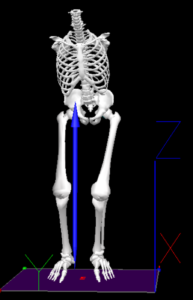
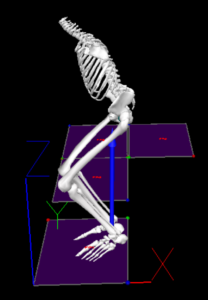
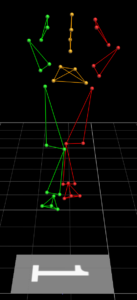
I have provided a couple of pictures from my current analysis. We are processing the data with two different software. The first software (pictures named Nexus) show the connected dots  recorded during data collection. We then import those dots into Visual3D to create the model that we are then calculating our variables of interest with (e.g., knee flexion at initial toe contact).

The pictures show parts of a jump-landing movement, so called drop-vertical jump, where we asked participants to drop down from a 30cm box onto our force plate (fields forming the floor), and on touching the ground, to jump vertically as high as they can and land a second time on the force plate.

Good luck with this final stage and over the next year! Can we ask how you heard about the prize and what made you apply?

My supervisor (at Coventry University) mentioned it to me as he thought it would be a good opportunity to apply and also get a reach for my research. I saw that one of the requirements was the global engagement aspect and I thought that is one criteria that I definitely cover due to the nature of my programme (being a Cotutelle student)…and also with the expert interviews I have conducted. I have had a global reach there from speaking to so many different people.

And then I decided to go for the ‘cutting edge, challenge led research with direct impact to society’ because we think that by designing a screening tool (for early risk interventions) we will have a major impact on individual level on this specific child, that they don’t get that injury, that they have proficient movement to continue sports that they develop to be healthy adults later on. And then, as ACL reconstructions are very expensive, and the rehabilitation period is really long, up to 2 years, we can potentially save some money by putting children into intervention programs early and hopefully not having this injury.

How will be being awarded this prize support you and your work?

I had a discussion with my supervisor when I found out that I had won as there are so many options we can do (with the scholarship prize). One area would be further education for myself. Developing more skills to perform my research, to develop more sophisticated data processing knowledge and skills. There are so many tools to support this. This is definitely one potential area that the funding can go towards. The funding offers the opportunity to support other research projects that are related to my topic- moving into different areas that open up new skill sets, I can experience with different devices and technology that I have not been using at the moment.

Please do update us with how you are getting on during the final year of your PhD. We’d love for you to join us at the WTUN Congress in October.

Thank you, I’ll definitely be able to share the overall findings of my PhD with the Network once the data processing and analysis is complete.

Thank you for your time Theresa, and congratulations once again on being awarded this prize. On behalf of the WTUN we wish you all the best in the final stage of your PhD- and enjoy Australia!


© World Technology Universities Network 2026