
Parallel Session – Responsible Science and Sustainability: Embedding Sustainability Across Technology Universities
Tuesday 3 November 202610:30 – 12:30
University of Applied Sciences Upper Austria, Linz Campus
Session Title: Responsible Science and Sustainability: Embedding Sustainability Across Technology Universities
Date: Tuesday 3 November
Time: 10.30-12.30
Session Overview
Sustainability is increasingly central to the mission and activities of universities worldwide. Technology universities have a unique opportunity to contribute to sustainable development through research, education, campus operations, partnerships, and community engagement.
As institutions strive to address environmental, social and economic challenges, ‘Responsible Science’ provides a framework for ensuring that knowledge and innovation contribute positively to society and support long-term sustainable development.
This session will explore how universities are embedding sustainability across institutional activities and advancing sustainable development through research, teaching, leadership, and collaboration.
Through short impulse talks and interactive discussion, participants will share experiences, examine challenges, and identify opportunities for collective action across the WTU-Network.
Chair:
- Professor Mark Kurz, Professor of Mobile Software Systems, University of Applied Sciences Upper Austria
Speakers:
- Professor Ir. Ts. Dr. Zaini Ahmad, Deputy Vice Chancellor (Development), Universiti Teknologi Malaysia
- Professor Jose Daniel Diniz Melo, Rector, Federal University of Rio Grande do Norte
- Dr Samak Kaewsuksaeng, Vice President for Research and Innovation, Thaksin University
- Professor Mark Kurz, Professor of Mobile Software Systems, University of Applied Sciences Upper Austria
Professor Ir. Ts. Dr. Zaini Ahmad
‘Environmental, Social, and Governance (ESG) Practices Towards Planetary Health for Sustainability in Technology Universities’
The continuous expansion of higher education institutions has inadvertently led to a significant escalation in greenhouse gas (GHG) emissions from daily university operations, which profoundly impacts both local and global environmental health by contributing to air pollution and accelerating climate change. Recognizing this critical challenge, it is imperative for universities to fundamentally rethink their infrastructure and operational strategies by embedding comprehensive Environmental, Social, and Governance (ESG) practices directly into their long-term campus development plans. The deliberate integration of these ESG frameworks acts as a powerful catalyst to drive the United Nations Sustainable Development Goals (SDGs), ultimately transforming the traditional academic environment into a resilient, sustainable, and highly optimized green working ecosystem that champions ecological responsibility among students, faculty, and administrative staff. To systematically address these environmental imperatives, this session shares actionable goals of technology university dedicated to substantially reducing the overall carbon footprint across all campus facilities, ensuring that institutional sustainability targets are both measurable and achievable. A pivotal component of this strategic mitigation effort is the conceptualization and deployment of a centralized, interactive carbon footprint dashboard. This digital platform is specifically engineered to dynamically monitor the intensity of the campus carbon footprint effect, providing administrators and stakeholders with transparent, real-time data to track consumption patterns, identify emission hotspots, and evaluate the success of ongoing green initiatives. Finally, to ensure the maximum efficacy of these reduction strategies, the framework introduces advanced decarbonization initiatives powered by cutting-edge Artificial Intelligence (AI) tools. These sophisticated AI systems utilize predictive analytics and machine learning algorithms to automate resource efficiency, intelligently optimize campus energy loads, and ensure the absolute minimum GHG effect, thereby establishing a proactive, technologically advanced, and highly effective blueprint for long-term institutional carbon footprint reduction. Hence, international networks namely WTUN can serve as catalysts for collective action, shared strategy, institutional commitment, and measurable outcomes for sustaining meaningful collaboration. Together, technology universities can lead global efforts towards planetary health ecosystem and sustainable future.
Discussion Questions:
1. How can universities effectively bridge the gap between high-level ESG (Environmental, Social, and Governance) frameworks and everyday campus operations to genuinely champion a “green working ecosystem”?
2. In what ways might a centralized, interactive carbon footprint dashboard influence the daily behavior and environmental responsibility of students, faculty, and administrative staff?
3. What are the practical challenges and ethical considerations of relying on advanced Artificial Intelligence and predictive analytics to automate resource efficiency and manage campus energy loads?
4. What specific metrics or Key Performance Indicators (KPIs) should be prioritized to evaluate the true success of these green initiatives?
5. As higher education institutions continue to expand, how can they balance the physical need for new infrastructure with the proposed mandate to maintain the “absolute minimum GHG effect”?
Professor Jose Daniel Diniz Melo
‘Inclusive and Sustainable Research: Building a More Diverse and Responsible University’
Universities play a fundamental role in advancing sustainable development, not only through research and innovation, but also by creating equitable opportunities for people from diverse backgrounds to participate in science. The Federal University of Rio Grande do Norte (UFRN) has implemented institutional initiatives that integrate research, inclusion, diversity, and social responsibility as interconnected dimensions of sustainable science. Among these initiatives are dedicated research funding programs for students and researchers who are mothers, aimed at addressing the challenges of balancing scientific careers and parenting responsibilities while promoting gender equity. UFRN has also established an affirmative-action program in undergraduate research, providing scholarships for Black and mixed-race students, Indigenous students, members of traditional Afro-Brazilian rural communities, and students with disabilities. These initiatives broaden access to scientific training and help reduce inequalities in participation in research. Together, they reflect a broader understanding of sustainability in which social sustainability depends on diversity, inclusion, and opportunities for all in the production of knowledge. By enabling students from historically underrepresented groups to enter and engage in scientific research, UFRN contributes to building a more diverse, inclusive, and equitable scientific community—one that values different perspectives and experiences and recognizes their contribution to the advancement of knowledge and society.
Discussion question:
How can universities transform inclusion and diversity policies into long-term strategies for sustainable and responsible science?
Dr Samak Kaewsuksaeng
‘Community-Powered Social Innovation for a Sustainable Future’
In an era of complex social, economic, cultural, and environmental challenges, universities are increasingly expected to move beyond teaching and research to become active partners in sustainable societal transformation. This presentation highlights Thaksin University’s commitment to community-powered social innovation as a pathway toward a sustainable future, particularly in Southern Thailand. Central to this approach is the recognition of communities not merely as beneficiaries, but as co-creators of knowledge, innovation, and meaningful change. By integrating academic expertise, research, technology, local wisdom, and community participation, the university develops innovative solutions that respond to local needs while generating sustainable social impact. These initiatives aim to strengthen human capacity, enhance local livelihoods, creatively preserve cultural heritage, promote responsible use of natural resources, and expand opportunities for inclusive development. Through collaborative partnerships among the university, communities, local authorities, businesses, and other stakeholders, locally grounded ideas can be transformed into sustainable solutions with broader impact. Thaksin University thus positions itself as a catalyst, connector, and co-creator of positive change. Ultimately, community-powered social innovation can empower communities, transform local strengths into collective action, and contribute to a more inclusive, resilient, and sustainable future for Southern Thailand and beyond.
Discussion Questions
1. How can universities empower communities to become co-creators of social innovation rather than simply beneficiaries?
2. What local strengths, knowledge, or cultural resources in your community could be transformed into social innovations?
3. How can community-powered social innovations remain sustainable and create lasting impact beyond university support or project funding?
Professor Mark Kurz
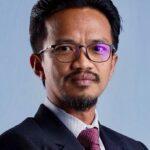 Prof. Dr. Zaini Ahmad
 Professor José Daniel Melo
 Assoc. Prof. Dr. Samak Kaewsuksaeng
 Professor Marc Kurz