

August 2026
Welcome to the latest edition of the WTUN newsletter: featuring a roundup of news, updates and events happening across the network.
Greetings from the World Technology Universities Network.
The deadline for registrations for World Technology Universities Network Congress 2026 has been extended to Thursday 3 September. If any members plan to attend and haven’t yet registered, please do so via the online registration.
The Call for Speakers for this year’s programme were sent via the designated General and Operational Board members at your university. If you are interested in speaking at WTUC and need more information, please contact the relevant Operational Board Member at your university (contacts can be found via individual member pages here –wtu-n.net/members)
On behalf of our hosts, we look forward to welcoming you to Austria in November! (wtu-n.net/congress).
We are pleased to share the third contribution to the WTUN Research Blog submitted by Professor Mohd Hafiz Dzarfan Othman, Universiti Teknologi Malaysia. Read on for more about their research on Membrane Technology – From Ideas to Impact: Advancing Hollow Fibre Membrane Technology for a More Sustainable Future
Finally, news from our members including a welcome message from University of Bradford’s new Vice-Chancellor Professor Gillian Murray and an invite to postgraduate researchers from all disciplines, to submit an abstract for the PGR Conference 2026 and SAIT’s students shine on the international stage at the European Innovation Academy (EIA) in Porto, Portugal!
REMINDER: If you would like to share news, updates, events or milestones via this newsletter, then please contact wtun@bradford.ac.uk.

WTUC2026 – Register Now! (Deadline Extended)

‘Responsible Science: The Role of Higher Education for Shaping the Future’
This year’s theme brings together scholars, practitioners, and innovators to explore how universities can lead the transition toward a more sustainable and equitable world. Addressing the transformative power of renewable energies, artificial intelligence, and sustainability, the conference highlights higher education’s responsibility in driving research, fostering ethical innovation, and preparing future generations to navigate complex global challenges. Participants will engage in interdisciplinary dialogue, share forward-thinking practices, and co-create pathways for responsible scientific leadership that shapes a resilient future for all.
Congress sub-themes:
- Renewable Energy
- Artificial Intelligence
- Sustainability
View the programme here – www.wtu-n.net/2026-congress/programme
Register before 20 August 3 Sepetember- REGISTRATION
Meet us at EAIE 2026

Will your university be in Glasgow? Contact wtun@bradford.ac.uk to connect with Michael, Denise and fellow WTUN members!
We’re excited to invite all WTUN member colleagues to join us at EAIE 2026, where global minds in higher education come together to shape the future. This is a fantastic opportunity to strengthen our network, share innovative practices, and explore new avenues for collaboration.
Find us at the World Technology Universities Network Stand G58 in the exhibition hall.

 From Ideas to Impact: Advancing Hollow Fibre Membrane Technology for a More Sustainable Future
Introducing Professor Mohd Hafiz Dzarfan Othman, Universiti Teknologi Malaysia
Department / Research Area: Membrane Technology
Email Contact: dzarfan@utm.my
Every time I see clean water flowing from a tap, I am reminded that millions of people around the world still do not have reliable access to this basic necessity. The same challenges extend beyond water to clean energy, environmental pollution and healthcare. These interconnected issues have shaped my research journey over the past decade and continue to inspire my work today.
As a researcher at Universiti Teknologi Malaysia, I have always believed that research should do more than produce scientific publications. It should solve real problems and improve lives. That belief led my research group and me to focus on developing hollow fibre membrane technology, a versatile platform that can help address some of today’s biggest global challenges.
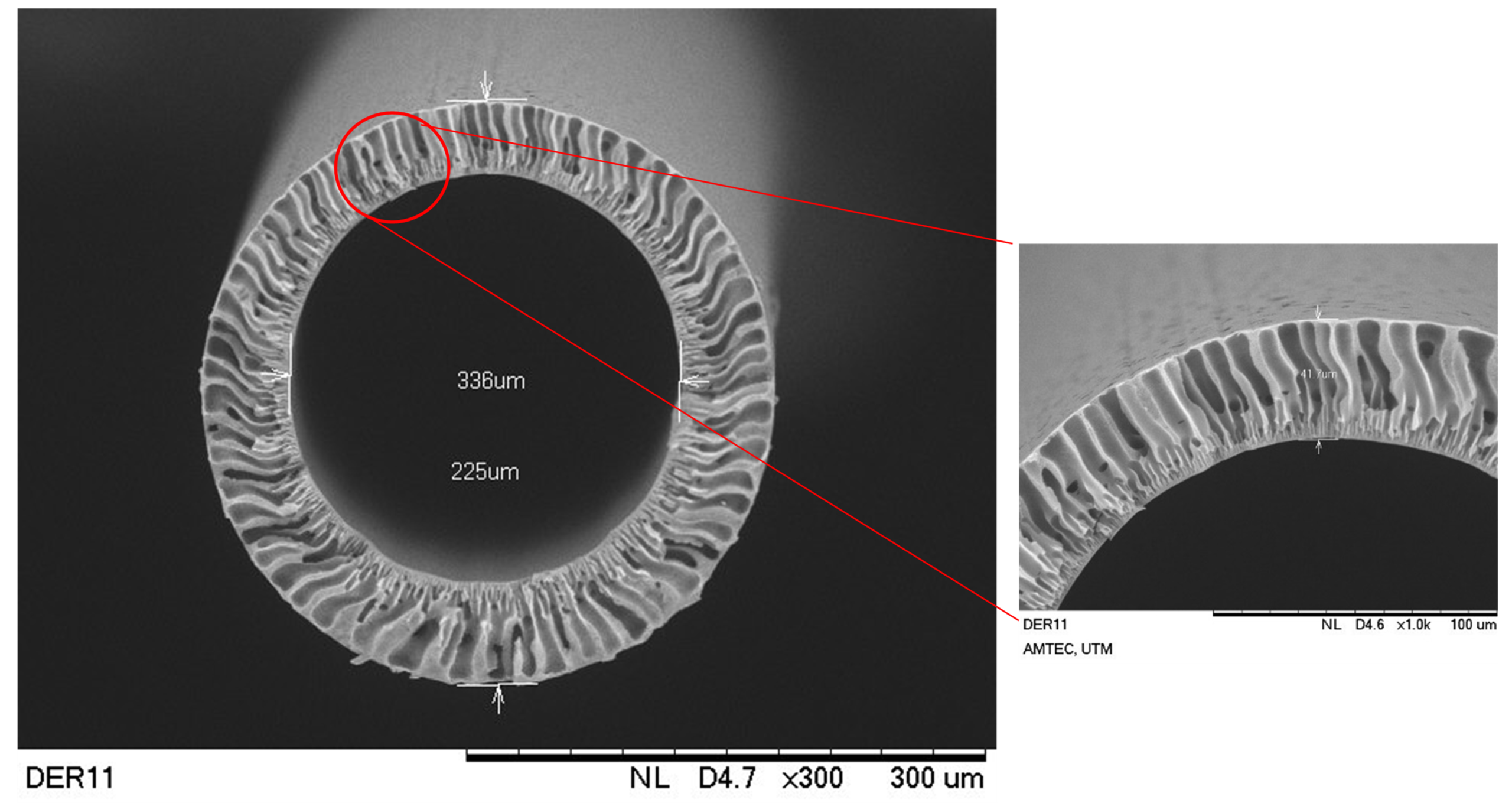
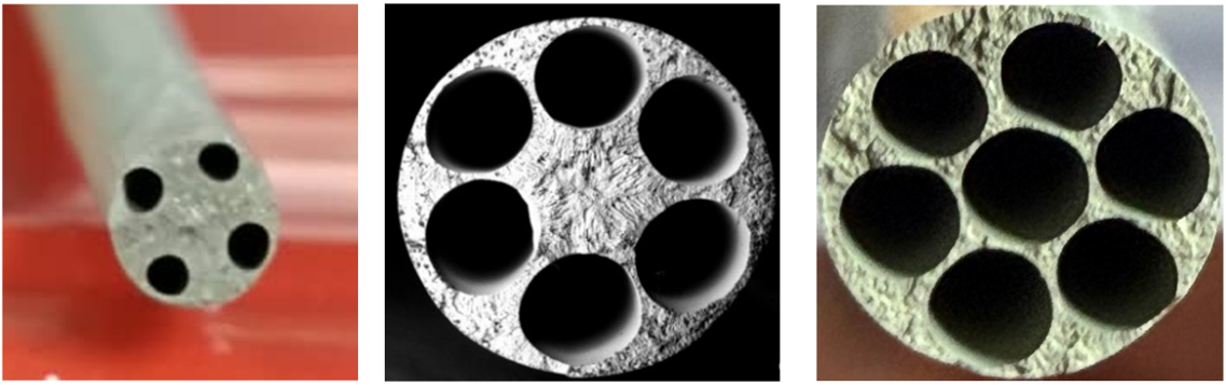
While the name may sound technical, the concept is surprisingly simple. Hollow fibre membranes, as shown in Figure 1, are tiny (in millimetre size), straw-like fibres with microscopic pores that selectively separate unwanted substances from water, gases, or even blood. Their unique structure allows them to perform highly efficient separations while requiring relatively little space and energy, making them an attractive solution for tackling some of today’s most pressing global challenges. This simple concept has enormous potential, from producing clean drinking water to supporting renewable energy and improving medical treatments.
Our journey has been filled with challenges and exciting discoveries. One of our biggest goals was to make this technology more affordable and sustainable. Traditional ceramic membranes are highly effective but expensive because they rely on costly raw materials. We began asking ourselves a different question: what if the answer could be found in materials that many people consider waste?
That question led us to develop ceramic membranes using locally available natural clay alongside agricultural by-products such as rice husk ash and palm oil waste. By transforming these materials into high-performance membranes, we were able to significantly reduce production costs while creating a more sustainable manufacturing process. This approach not only supports a circular economy but also creates opportunities for developing countries to produce advanced membrane technologies using their own local resources.
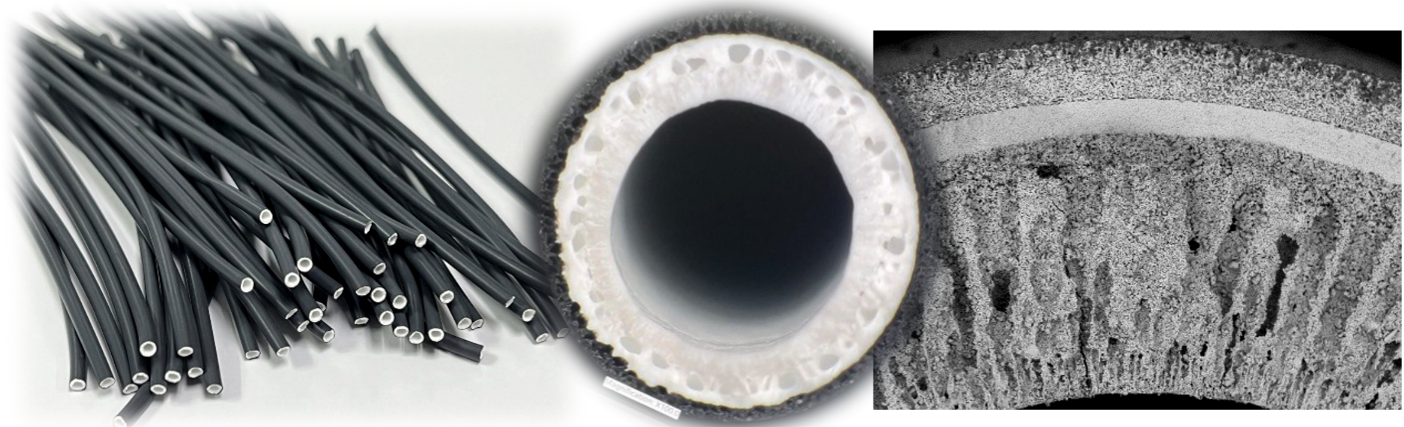
As our understanding of hollow fibre membranes grew, so did our ambition to rethink how they could be designed. Rather than relying on conventional single-layer membranes, my team pioneered the development of multilayer hollow fibre membranes that combine several functions, where each layer has a specific role, as depicted in Figure 2. In our membranes, one layer can provide structural strength, another enhances separation performance, while another introduces specialised functions such as self-cleaning or pollutant removal. Bringing these capabilities together allows us to create membranes that are not only more efficient but also more durable and versatile.
Building on this success, we also developed multi-channel hollow fibre membranes, which contain several tiny flow channels instead of just one as shown in Figure 3. Although this may seem like a small design change, it significantly increases the amount of water that can be treated while improving the membrane’s mechanical strength and long-term reliability. These innovations have enabled us to design membrane systems that are better suited for demanding industrial processes and large-scale water treatment, where efficiency and durability are equally important.
These advances have allowed us to expand the role of hollow fibre membranes far beyond conventional filtration. Today, our research spans water purification, industrial wastewater treatment, clean energy production, and biomedical technologies. We have developed multifunctional membranes capable of removing harmful pollutants from wastewater while reducing maintenance requirements, while our latest membrane systems are contributing to cleaner industrial processes and supporting the production of green hydrogen, one of the world’s most promising renewable energy sources. Seeing one technology evolve to address such diverse challenges has been one of the most rewarding aspects of my research career.
Scientific Achievements via Collaboration
None of these achievements would have been possible without collaboration.
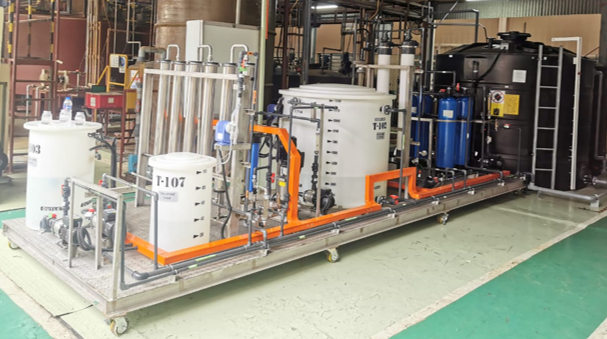
Throughout this journey, we have worked closely with industry partners, government agencies, and fellow researchers to ensure that our innovations move beyond the laboratory and into practical use. Collaborations with organisations such as PETRONAS, the National Hydraulic Research Institute of Malaysia (NAHRIM), Tenaga Nasional Berhad Research (TNBR), and UMW have enabled us to translate research into pilot-scale systems for clean water production, industrial wastewater reclamation, and renewable energy applications and one example is shown in Figure 4.
Every collaboration brings fresh perspectives, complementary expertise, and a deeper understanding of local needs, strengthening both the research and its impact.
This is one of the reasons I value the World Technology Universities Network (WTUN). The network provides an opportunity to connect researchers from diverse disciplines, cultures, and countries who share a common goal of using research to address global challenges. I believe there are exciting opportunities for collaboration in areas such as sustainable water treatment, advanced membrane materials, circular economy approaches, clean hydrogen technologies, and biomedical innovations. By sharing knowledge and learning from one another, we can accelerate the development of practical solutions that benefit communities around the world.
Looking ahead, my ambition extends beyond developing better membrane technologies. I hope our work continues to contribute to a future where clean water, sustainable energy, and healthier communities are accessible to everyone.
Through collaboration within the WTUN community, I believe we can continue transforming scientific discoveries into practical solutions that create lasting global impact.
Collaboration Opportunities including how to work with Professor Othman:
Our work at AMTEC UTM thrives on interdisciplinary exchange. I’d be keen to connect with fellow WTUN members working on advanced materials, circular economy approaches, or green hydrogen technologies to see how we can co-create more resilient global solutions.
About
Ts. Dr. Mohd Hafiz Dzarfan Othman is a Professor in the Faculty of Chemical and Energy Engineering at Universiti Teknologi Malaysia (UTM) and currently serves as the Dean of School of Graduate Study at UTM. He earned his PhD in Chemical Engineering from Imperial College London in 2011. His research focuses on the development of innovative membrane technologies for pollutant removal from water and wastewater, as well as for efficient energy generation. He has filed 50 intellectual property patents and has published more than 700 indexed articles, achieving an H-index of 80 with citation of around 24,000 according to Scopus. He is advancing Malaysia’s membrane initiatives through his research efforts and his spin-off company, Filt Us Sdn. Bhd.
Keywords: Membrane Technology | Technology & Innovation | Advanced Materials | Green Technologies
If you are interested in contributing to future editions of this blog, please contact Denise Whitehead wtun@bradford.ac.uk and a submission template will be shared with you.

Southern Alberta Institute of Technology

SAIT’s Applied Research and Innovation Services (ARIS) is bringing Alberta’s research to a global conversation
ARIS recently participated in the 17th International Conference on the Durability of Building Materials and Components (DBMC 2026) and shared research findings with an international audience.
Drawing on research conducted at ARIS’ Green Building Technology Access Centre (GBTAC), Maeric Rico, Research Assistant at GBTAC, presented on integrating performance, durability and affordability in tiered energy codes for cold-climate housing. The presentation addressed critical topics while enabling knowledge exchange with researchers, industry professionals and practitioners from around the world. Supported by Alberta Real Estate Foundation (AREF) and Natural Resources Canada (NRCan), this research helps advance more sustainable, durable and affordable housing solutions.
SAIT is one of Canada’s top research colleges. Please reach out to the ARIS Interim Director, Jodi David, Jodi.David@sait.ca to learn more about ARIS and/or discuss any partnership opportunities.
Porto to Podium: SADT Students Shine on the International Stage
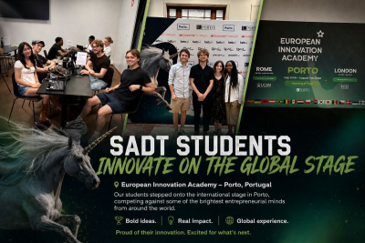
Four School for Advanced Digital Technology (SADT) students recently represented SAIT at the European Innovation Academy (EIA) in Porto, Portugal, joining innovators from around the world for an intensive three-week entrepreneurial experience.
Among the standout achievements, Nicholas Irvine was part of a top-three finishing team with Solvo, an educational technology application designed to help primary school teachers identify and support diverse learning needs while reducing administrative workload. By combining machine learning with teacher-driven decision making, the project demonstrated how technology can enhance learning while keeping people at the centre of the process.
SADT students Amal Musse, Kaley Wood, and Ayden Ryan-Ackerman also made significant contributions to multidisciplinary startup teams, helping develop innovative solutions that addressed real-world challenges. Their projects included Aligned, a clothing brand focused on size inclusivity, Banquet, an application supporting individuals with food sensitivities, and Railband, a luggage damage detection solution.
Beyond the projects themselves, the experience challenged students to collaborate across cultures, disciplines, and time zones while applying the technical and professional skills developed through their studies at SAIT. Working alongside peers, mentors, and industry professionals from around the globe, they strengthened their abilities in communication, problem solving, adaptability, and innovation.
University of Bradford

An introduction to the University of Bradford’s new Vice-Chancellor, Professor Gill Murray.

I’m so delighted to have joined the University of Bradford this summer. As a host and founding member, the WTUN is really important to the University of Bradford, and I’m looking forward to playing my part in helping the network to deliver its objectives.
I’ve only been part of the University of Bradford for a short time, but I can already see so many opportunities to explore for connecting and collaborating with other universities around the world. Here at Bradford, we’re celebrating our 60th anniversary in October, so there’s a lot going on and a lot to be proud of.
My academic life began at another member institution, the University of York, where I studied Chemistry, Industrial Technology and Economics. I then went on to study a work-based PhD in Chemical Engineering at the former University of Manchester Institute of Science and Technology, with EA Technology. Right from the start of my career, I’ve seen how technology universities’ research can inform challenges faced by society, and how researchers’ ideas can change lives and shape the world around us.
Before the University of Bradford, I was Deputy Principle at Heriot-Watt University where I led enterprise and business engagement strategy. At the University of Liverpool, I co-founded and directed the Virtual Engineering Centre, focusing on collaborative approaches to innovation, digital technologies and economic growth.
Through these positions, I have built my career at the intersection of higher education, industry and economic development. With many years of experience leading large-scale partnership programmes between universities, industry and government, I am and always will be excited about the profound contribution universities can make in their local area, and all over the world. As I wrote last month in a blog post for the Higher Education Policy Institute, it is the power of universities to connect people that truly inspires me, and that’s why I’m so proud of the things this Network is doing.
It’s remarkable that the World University Technologies Network launched almost a decade ago and has achieved so much in that time. With members coming from across the globe, representing different perspectives, this network is a powerful vehicle for solving global challenges. I’m really looking forward to being part of it and hope to have the opportunity to meet other members soon.
Professor Gillian Murray, Vice-Chancellor, The University of Bradford
Call for Abstracts: PGR Conference 2026
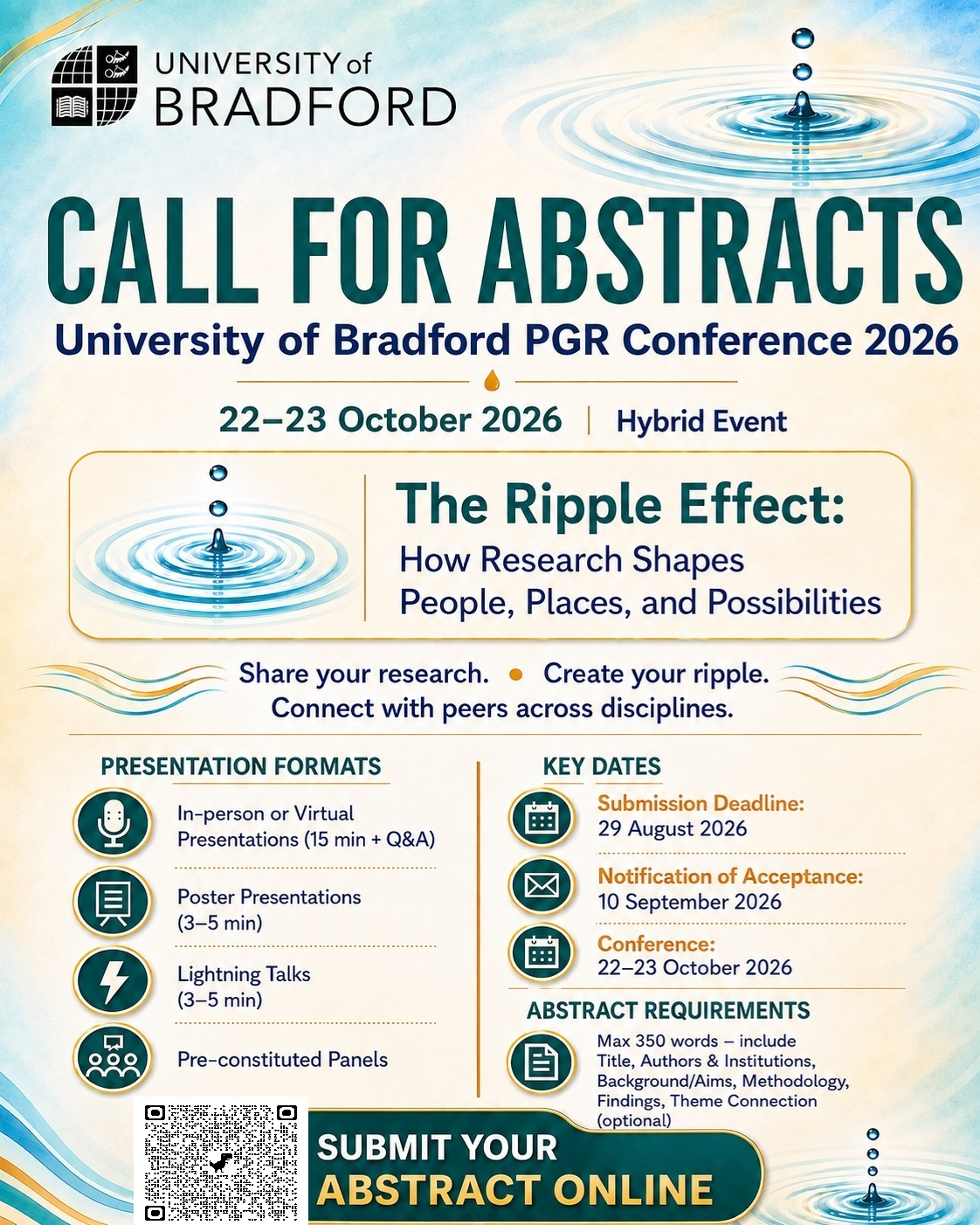
This year’s theme is “The Ripple Effect: How Research Shapes People, Places, and Possibilities”.
Research does more than generate knowledge. It influences people, transforms communities and environments, and creates new opportunities for innovation, development, and real-world impact.
Our conference offers postgraduate researchers the opportunity to present their research to a multidisciplinary audience, receive constructive feedback, exchange ideas with researchers and academics, build professional networks and research connections and demonstrate how their work creates meaningful impact.
📅 Conference: 22–23 October 2026
📍 Hybrid – University of Bradford and online
📝 Abstract limit: Maximum 350 words
⏰ Submission deadline: 29 August 2026
📩 Acceptance notification: 10 September 2026
Presentation formats include:
🎤 In-person or virtual presentations — 15 minutes plus Q&A
🖼️ Poster presentations — 3–5 minutes
⚡ Lightning talks — 3–5 minutes
👥 Pre-constituted panels
Abstract submissions must be made through our online form, linked below, by Saturday 29 August 2026.
Do you know someone in your university who would be interested in this newsletter? Forward the email to colleagues or share the link with your networks.
All members are invited to contribute to this newsletter through their Operational Board Member (found here). Please contact your Operational Board member with stories or events which will be of relevance to the shared vision and commitments of the WTUN and its members, inspiring opportunity for engagement on commonalities, sharing knowledge, or collaboration.
All calls for content can be shared with the WTUN Secretariat at wtun@bradford.ac.uk.
To discuss joining the World Technology Universities Network, please contact the WTUN Development Manager:
Denise Whitehead
Email: wtun@bradford.ac.uk