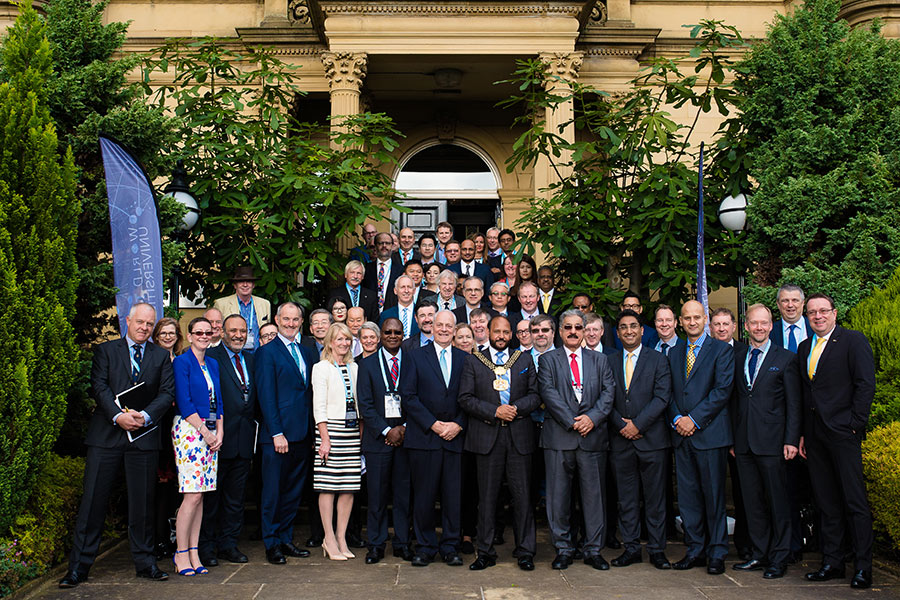
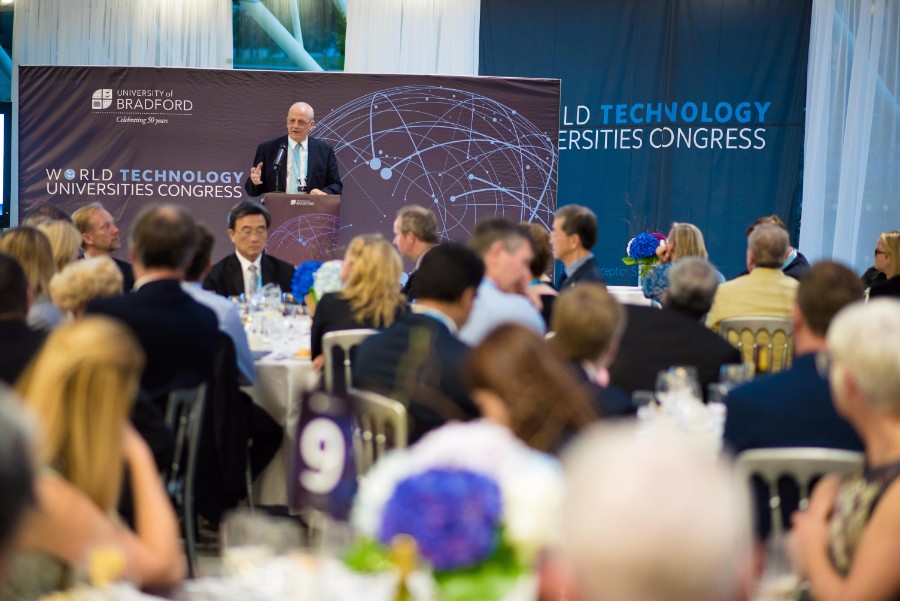
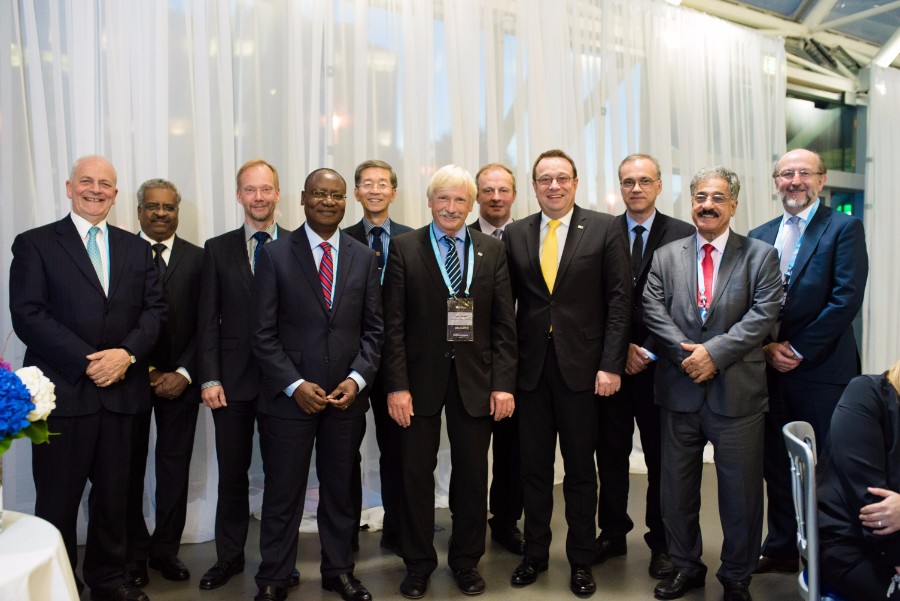
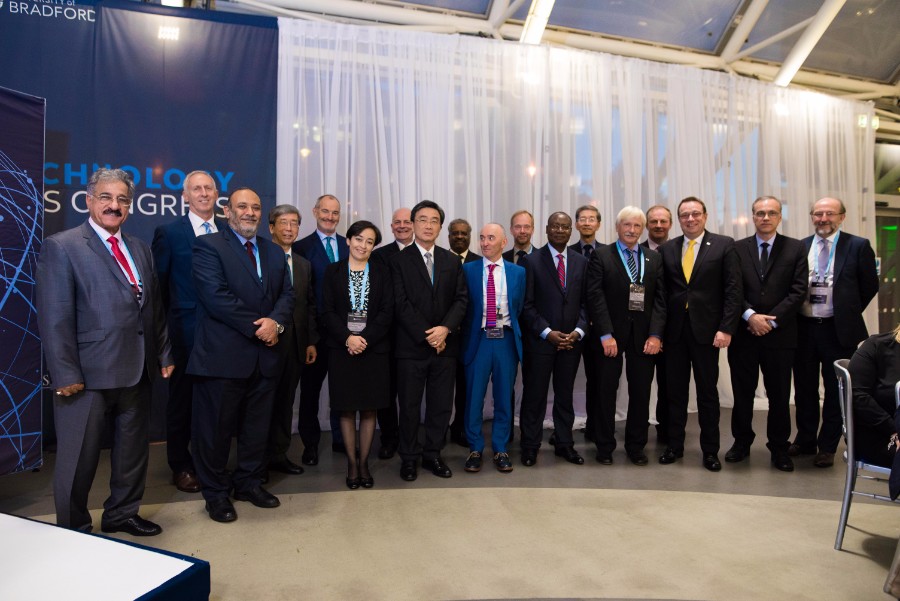
Four universities from Canada, India, Nigeria and Thailand are set to join the World Technology Universities Network today (29 November 2018) at the WTUN Congress in Chennai, India.
The new members will increase the WTUN’s ranks to 22 technology-focused institutions from Europe, Africa, Australia, Asia, North and South America. The new members are: University of Africa, Toru-Orua, Nigeria; King Mongkut’s University of Technology Thonburi, Thailand; Sandip University, India; and York University, Canada.
Launched at the University of Bradford in 2017, the WTUN is a network of global technology universities committed to undertaking challenge-led, cutting-edge research to benefit people and society, and providing education to enable the next generation to tackle global challenges.
WTUN members benefit from exchanges and collaborative research and facilitated links between institutions, industry, NGOs and SMEs. Over 100 delegates from 30 organisations are taking part in the third WTUN Congress from 28-30 November, hosted by the Indian Institute of Technology Madras and the Hindustan Institute of Technology and Science.
 WTUN Chair and University of Bradford Vice-Chancellor, Professor Brian Cantor said: “The speed at which the network is growing is testament to the value that comes from bringing global institutions together that share a common focus on technology education and research, and the benefits that this can bring to society. We hope to see the WTUN continue to go from strength to strength.”
The University of Africa, Toru-Orua (UAT), Nigeria was established in 2016. It carries out applied research, with a focus on enterprise development and entrepreneurship, in areas including biotechnology applications for food production, nutrition, security and health; alternative building and road construction materials; engineering and operations; renewable and non-renewable energy systems; environmental remediation and conservation; digitised linguistics; and the oil and gas industry.
 Dr Godwin Poi, Acting Director of University Advancement and Linkages at UAT, said: “The WTUN’s objectives are consistent with our own – to carry out needs driven research for innovation and development and tackle major challenges such as poverty, climate change and pollution. As a new institution, joining the WTUN enables us to partner with over 20 like-minded universities, drawing on their combined expertise to achieve our goals in a much shorter timeframe.”
King Mongkut’s University of Technology Thonburi, Thailand can trace its origins back to the Thonburi Technology College set up in 1960. KMUTT became one of the campuses of King Mongut’s Institute of Technology in 1974 and was granted autonomous university status in 1998. KMUTT has particular strengths in engineering, energy, bioresources, environment, science, technology, architecture, and linguistics and is one of Thailand’s nine designated national research universities.
 Dr Pornapit Darasawang, Vice President for Internationalisation at KMUTT, said: “In becoming a member of WTUN, we’re looking forward to making new contacts with other technology universities, which share the same focus and face the same challenges as we do. WTUN will help us expand those contacts not just in South East Asia, but around the globe, providing new and exciting opportunities in research and industry for our staff, students and graduates.”
Sandip University in Nashik, India was established in 2016. It has a particular focus on agro-development, covering areas like mechanised farming, health care, transportation, communication, waste management, energy, water resource, environment, disaster mitigation, computing and allied technologies.
 Professor Nallan Ramachandran, Vice-Chancellor of Sandip University, said: “We’re keen to develop partnerships with international universities, industries and research organisations as this can open up a myriad of opportunities for our students and staff. Membership of the WTUN will enable us to cement these partnerships, and support our commitment to create the next generation of modern thinkers and global citizens who can set new trends and help enact positive change.”
York University is a research-intensive institution established in 1959 and based in Toronto, Canada. Its research, scholarship and teaching strengths span numerous disciplines, including education, engineering, science, health, environmental studies, liberal and creative arts, law and business. Among current initiatives, it has established an Artificial Intelligence (AI) and Society Task Force, drawing on the University’s interdisciplinary strengths to provide a broader perspective, including impacts on humanity and society in addition to the core technology and questions around technology adoption.
 Dr Robert Haché, Vice-President Research & Innovation at York University, said: “As the third-largest university in Canada, York strives to be at the forefront of scientific discovery and to lead in technological innovation for the benefit of society. We hope to work with the members of the WTUN to foster technological innovation through international collaboration.”