One of WTUN’s founding members, Hamm-Lippstadt University of Applied Sciences turns 10 this year and the institution celebrated in style with various activities, a concert and their own commissioned beer!
Happy Anniversary HSHL!

One of WTUN’s founding members, Hamm-Lippstadt University of Applied Sciences turns 10 this year and the institution celebrated in style with various activities, a concert and their own commissioned beer!
Happy Anniversary HSHL!
The 21st century has seen the growth of a global market in information and knowledge. Science and innovation have become the key drivers of economic growth and societal development and technology universities are at the forefront, doing applied research that can be translated directly into benefits for people and society and delivering professional and vocational courses that enable their graduates to move directly and successfully into high-skilled job markets.
Unlike the traditional role of conventional universities as ivory towers for contemplative study and scholarship, technology universities are now playing a direct role as creators of wealth and motors for economic, social and technological change.
At the same time, the problems confronting the world are increasingly complex and systemic. Obvious examples are endemic poverty and ill health, climate change, energy and water supply, and collapsing states, migration and terrorism.
Collective strength
The World Technology Universities Network or WTUN has been launched as a response to these challenges.
WTUN consists of a wide range of different universities, geographically diverse, large and small, public and private, new and old, resolutely non-elitist and non-exclusive, committed to working together to do cutting-edge, challenge-led research and to provide socially relevant education for the next generation of global citizens.
The objective is to harness our collective strength, resources, expertise, experience and intellectual capital to make knowledge work for the benefit of society.
WTUN activities include sharing best practice on collaborative research to tackle the world’s problems, developing new teaching methods to educate global citizens, enhancing interactions with business, commerce, government and non-governmental organisations, creating new companies and small and medium-sized enterprises, running innovative student competitions and developing joint policy statements on key issues.
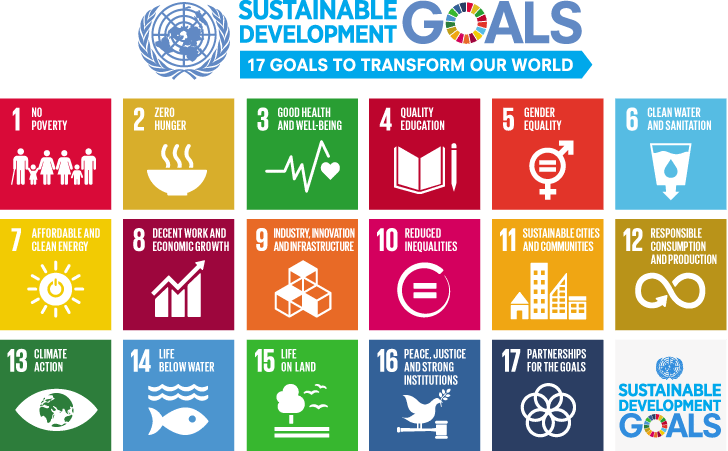
These activities contribute to all 17 of the United Nations’ Sustainable Development Goals, with four identified as initial priorities: gender equality; good health and wellbeing; clean water and sanitation; and sustainable cities and communities. We have three major current workstreams, on gender equality, innovation and entrepreneurship and the application of technology in learning.
Expanding the membership
WTUN was discussed initially at the first annual World Technology Universities Congress or WTUC1 in 2016, and was then launched at WTUC2 the following year in Bradford in the United Kingdom, with 18 founder members from Europe, Africa, Asia, Australia and South America. WTUC3 was held in Chennai in India late last year, when a number of other universities joined, and yet more indicated that they would join this year.
The network is growing rapidly, with an ambition to reach up to about 50 members over the next few years. Associate members include businesses and NGOs such as UNESCO, with over 300 additional university links.
We are actively seeking new members to contribute to this growth and strengthen all our activities. WTUC4 will take place in October in Taipei, Taiwan, and all universities, institutes, government agencies, NGOs and partner institutions are welcome.
Professor Brian Cantor is vice-chancellor of the University of Bradford, United Kingdom, which is a member of the World Technology Universities Network.
This article was originally published and is available at University World News
The WTUN has formally signed up to the SDG Accord, the collective commitment by the global higher education sector to help deliver the United Nations Sustainable Development Goals (SDGs).
The decision to become a supporting partner to the Accord is part of the network’s ongoing work on the SDGs which began in 2018.
Associate Pro-Vice-Chancellor at Coventry University, Joanne Dobson, who chairs the WTUN Working Group on the SDGs, explains: “Our idea was that the Sustainable Development Goals could provide the network with a clear focus and direction for its activities, within the wider theme of technology. SDG4, which is ‘quality education’, was obviously important to all our members. But we wanted to find out which of the other goals would most resonate within the network.”
The Working Group surveyed WTUN members during 2018 and identified three more Sustainable Development Goals that were considered the most relevant to activities within the network: SDG3 – good health and wellbeing; SDG6 – clean water and sanitation; and SDG11 – sustainable cities and communities.
“We took these to the WTUN Congress in Chennai in November 2018 and ran a session during which members presented on the work they were already doing to further these goals,” says Joanne Dobson. “The idea of adopting the goals as our focus was widely endorsed by members and ratified by the Board at the Congress. The only change was that members asked that a fourth Sustainable Development Goal – number 5, gender equality – was also added to the list.”
Work is now beginning to embed these goals into the WTUN’s activities. The network’s exchange programme, which funds visits between member institutions to build research partnerships or share best practice, now stipulates that half of all exchanges must directly address one or more of the four SDGs. Participants from these exchanges will be reporting back to the network during the 2019 Congress hosted by the National Taiwan University of Science and Technology in November.
A Gender Equality Working Group has also been established, to identify what the WTUN can do to support its members on this goal. And of course, members will be encouraged to sign up to the SDG Accord themselves as institutions.
Only institutional signatories to the SDG Accord have to submit a formal report on their activities, which is then compiled into a report to the UN. As an endorsing partner network, the WTUN is not expected to report, but Joanne Dobson is keen that the network does so.
“We’re just starting out with this initiative, but we have a strong base to build on and more ideas to put into practice,” she says. “Compiling an annual report on what we, as a partner network, have supported and enabled our members to achieve would be a valuable exercise and help to show progress. And as more members join the network, we’ll continue to review the SDGs we have chosen to make sure we’re focusing on those that are most relevant to our mission in both research and education.”
On 1 January 2019, Tampere University of Technology and the University of Tampere merged to create the new multidisciplinary Tampere University. The university is Finland’s second largest.

The foundation-based university also became the majority shareholder of Tampere University of Applied Sciences. This new higher education community in Tampere will be made up of 30,000 students, 330 professors and 4,400 other staff members.
The underlying premise of the new university is the realisation that the problems faced by humanity have changed. A multidisciplinary approach will not only deliver more effective responses to global challenges but also open up new opportunities for science and its applications.
Technology, health and society are at the core of the university’s research and education and its strength lies in the combination of these areas. With the means of novel operating models, the university sets of to create scientific and societal value throughout the process of knowledge creation, from independent, multidisciplinary basic research to innovations and practical development. The university aims to develop inspirational and open learning and cooperation environments as well as new types of research, development and innovation platforms that support active life-long inclusion and diverse interaction with a wide variety of stakeholders.
The new university’s first President is Dr. Mari Walls. Before joining Tampere University she worked as President and CEO of LUKE Natural Resources Institute Finland. She has also held Professorship in Biodiversity and Environmental Sciences at the University of Turku.
The university’s Provost is Professor Jarmo Takala. Previously he has held the position of Vice President responsible for the research and doctoral education at Tampere University of Technology (TUT). He has been a Professor on Computer engineering since 2000 at TUT and has also held positions of Dean and Vice Dean of Faculty of Computing and Electrical Engineering and Head of Department of Computer Systems.
Tampere University values its international collaborations and looks forward to developing our partnership. We believe that human potential is unlimited and that you and us together, we can make a difference.
Four universities from Canada, India, Nigeria and Thailand are set to join the World Technology Universities Network today (29 November 2018) at the WTUN Congress in Chennai, India.
The new members will increase the WTUN’s ranks to 22 technology-focused institutions from Europe, Africa, Australia, Asia, North and South America. The new members are: University of Africa, Toru-Orua, Nigeria; King Mongkut’s University of Technology Thonburi, Thailand; Sandip University, India; and York University, Canada.
Launched at the University of Bradford in 2017, the WTUN is a network of global technology universities committed to undertaking challenge-led, cutting-edge research to benefit people and society, and providing education to enable the next generation to tackle global challenges.
WTUN members benefit from exchanges and collaborative research and facilitated links between institutions, industry, NGOs and SMEs. Over 100 delegates from 30 organisations are taking part in the third WTUN Congress from 28-30 November, hosted by the Indian Institute of Technology Madras and the Hindustan Institute of Technology and Science.
WTUN Chair and University of Bradford Vice-Chancellor, Professor Brian Cantor said: “The speed at which the network is growing is testament to the value that comes from bringing global institutions together that share a common focus on technology education and research, and the benefits that this can bring to society. We hope to see the WTUN continue to go from strength to strength.”
The University of Africa, Toru-Orua (UAT), Nigeria was established in 2016. It carries out applied research, with a focus on enterprise development and entrepreneurship, in areas including biotechnology applications for food production, nutrition, security and health; alternative building and road construction materials; engineering and operations; renewable and non-renewable energy systems; environmental remediation and conservation; digitised linguistics; and the oil and gas industry.
Dr Godwin Poi, Acting Director of University Advancement and Linkages at UAT, said: “The WTUN’s objectives are consistent with our own – to carry out needs driven research for innovation and development and tackle major challenges such as poverty, climate change and pollution. As a new institution, joining the WTUN enables us to partner with over 20 like-minded universities, drawing on their combined expertise to achieve our goals in a much shorter timeframe.”
King Mongkut’s University of Technology Thonburi, Thailand can trace its origins back to the Thonburi Technology College set up in 1960. KMUTT became one of the campuses of King Mongut’s Institute of Technology in 1974 and was granted autonomous university status in 1998. KMUTT has particular strengths in engineering, energy, bioresources, environment, science, technology, architecture, and linguistics and is one of Thailand’s nine designated national research universities.
Dr Pornapit Darasawang, Vice President for Internationalisation at KMUTT, said: “In becoming a member of WTUN, we’re looking forward to making new contacts with other technology universities, which share the same focus and face the same challenges as we do. WTUN will help us expand those contacts not just in South East Asia, but around the globe, providing new and exciting opportunities in research and industry for our staff, students and graduates.”
Sandip University in Nashik, India was established in 2016. It has a particular focus on agro-development, covering areas like mechanised farming, health care, transportation, communication, waste management, energy, water resource, environment, disaster mitigation, computing and allied technologies.
Professor Nallan Ramachandran, Vice-Chancellor of Sandip University, said: “We’re keen to develop partnerships with international universities, industries and research organisations as this can open up a myriad of opportunities for our students and staff. Membership of the WTUN will enable us to cement these partnerships, and support our commitment to create the next generation of modern thinkers and global citizens who can set new trends and help enact positive change.”
York University is a research-intensive institution established in 1959 and based in Toronto, Canada. Its research, scholarship and teaching strengths span numerous disciplines, including education, engineering, science, health, environmental studies, liberal and creative arts, law and business. Among current initiatives, it has established an Artificial Intelligence (AI) and Society Task Force, drawing on the University’s interdisciplinary strengths to provide a broader perspective, including impacts on humanity and society in addition to the core technology and questions around technology adoption.
Dr Robert Haché, Vice-President Research & Innovation at York University, said: “As the third-largest university in Canada, York strives to be at the forefront of scientific discovery and to lead in technological innovation for the benefit of society. We hope to work with the members of the WTUN to foster technological innovation through international collaboration.”
Delegates from 30 world universities and 20 other institutions travelled from Europe, Africa, Asia, Australia, and North and South America, together with leaders of major organisations and industry to the second World Technology Universities Congress hosted in Bradford in August 2017.
Last year’s Congress, also hosted by Bradford, considered the feasibility of creating of a World Technology Universities Network. This year’s event took that one stage further and formally launched the network, with a memorandum of understanding and statement of intent being signed by attendees.
The purpose of the network is to:
University of Bradford Vice-Chancellor, Professor Brian Cantor, said: ‘Higher education, research, science and innovation are key drivers of economic growth, which depends on the positive exploitation of knowledge. Education transforms lives and societies, providing the route for technological advancement and social mobility.
‘By harnessing the combined strength, resource, expertise, experience and knowledge of a network of the world’s great technology universities, we will create a global alliance of the brightest and best, dedicated to making knowledge work for the benefit of society.
‘This is a significant development in how universities see their place in the world and will, I am sure, open up a future of immense possibility and capability. It will also be a significant moment in the history and development of Bradford and the wider region.’
The 2017 Congress was attended by almost 30 technology universities from all around the world and a raft of senior business and other leaders. The Congress programme and speakers represented a great wealth of perspectives from across the world, providing lively sessions with strong discussions and debate on the skills and innovation gap, global challenges for the 21st century and University- Business collaboration. A summary of the Congress is available in this report: Congress Report (PDF, 102 KB).
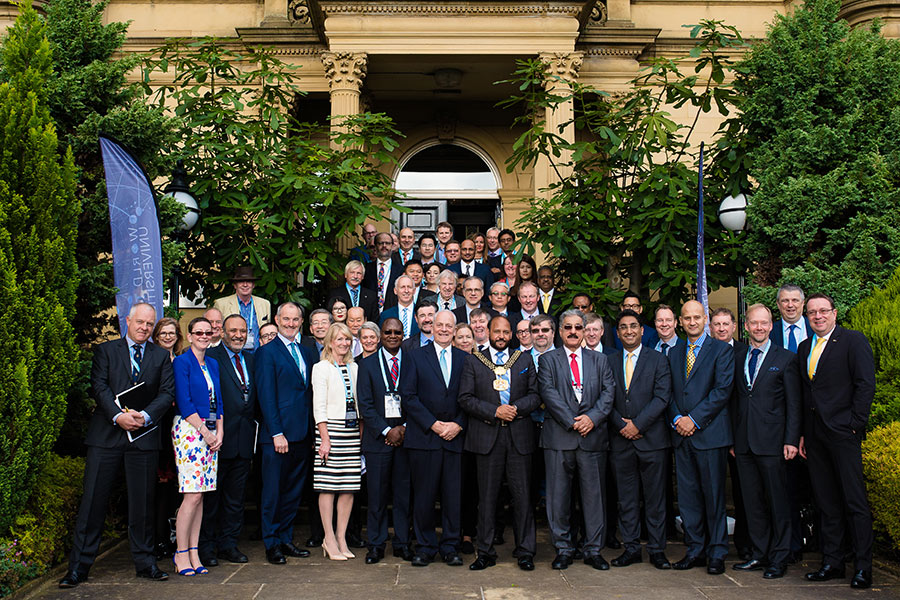
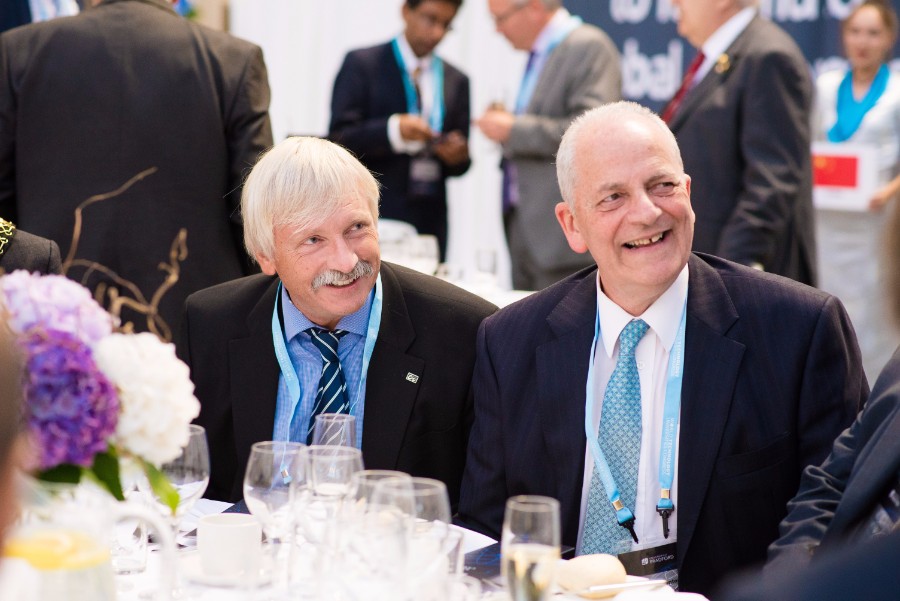
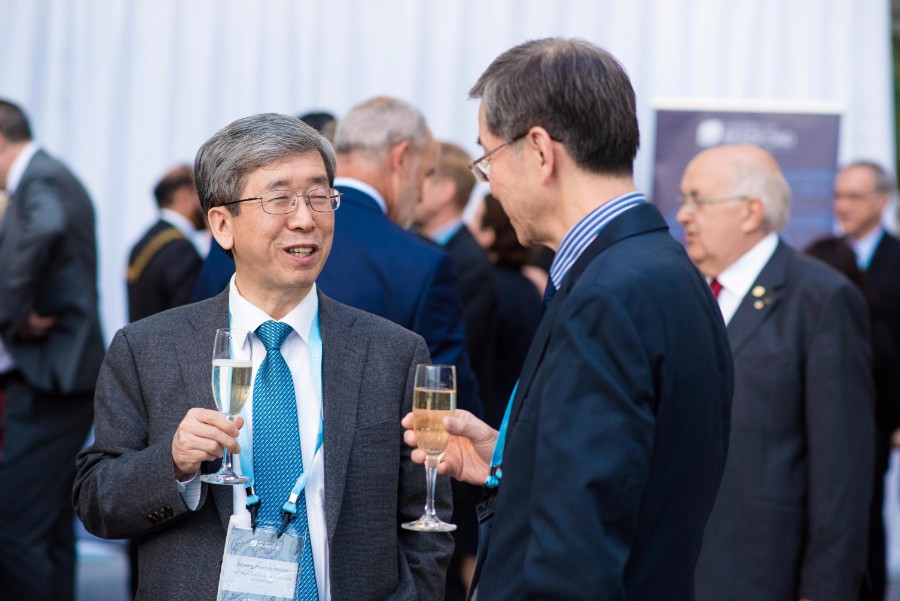
At the Congress dinner we launched the World Technology Universities Network. The Network will promote collaboration on a global scale with thirteen institutions who signed the memorandum of understanding to become founding members. We have a further seven institutions who signed the statement of intent and plan to join the Network in the coming months. A selection of images of the Congress are displayed below.








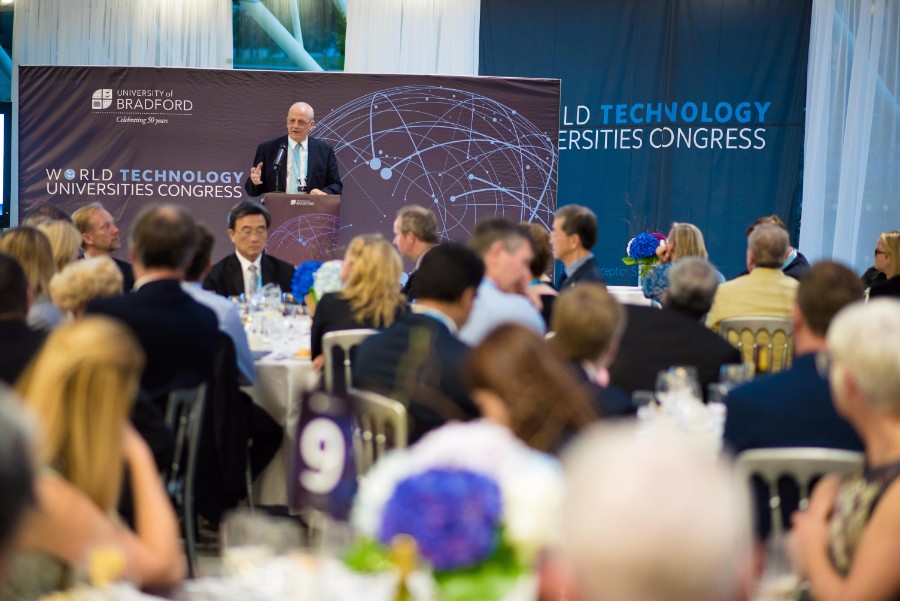

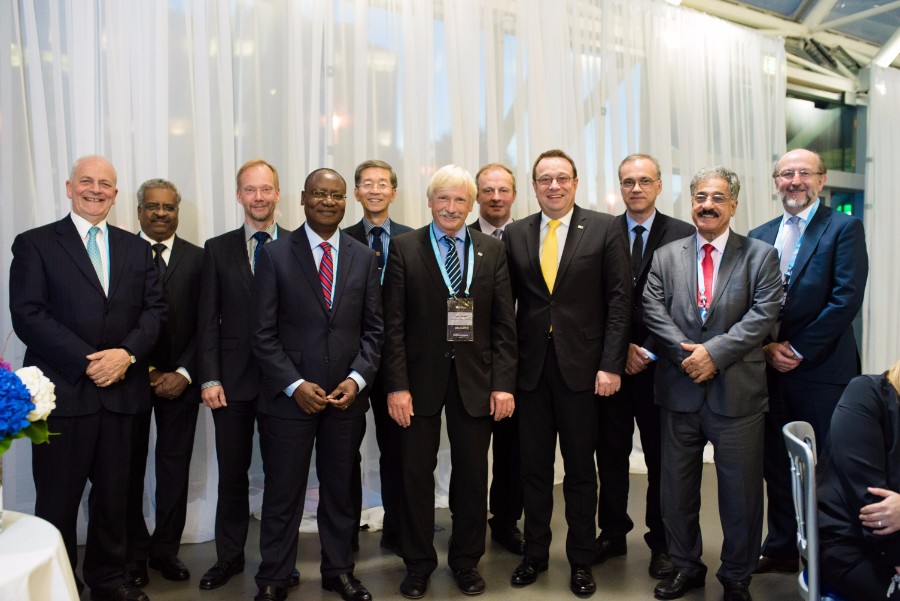
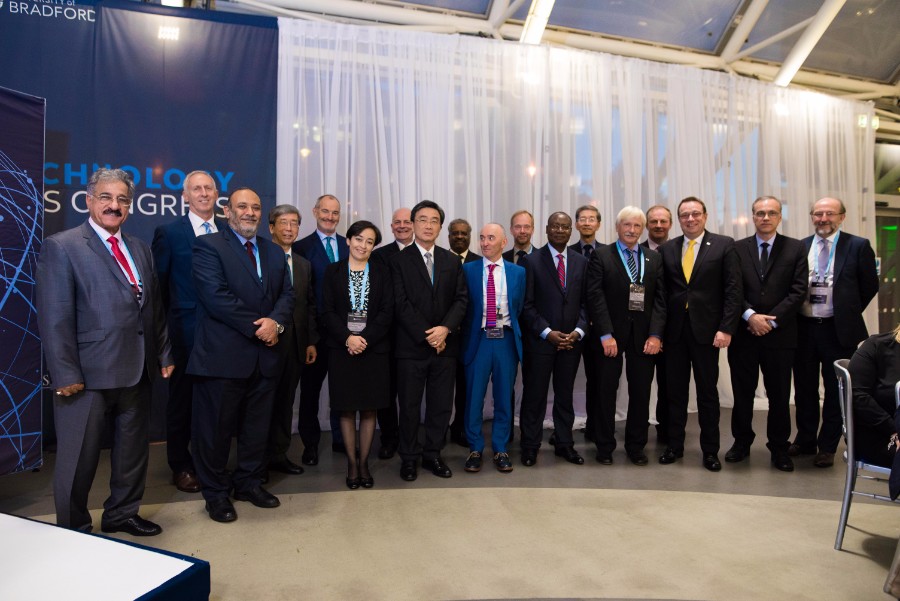
Hear from some of the Congress participants about the reason they attended and the idea of launching a network of world technology universities.
“The challenges facing the world are complex. Solutions are required urgently. Ill-health, poverty, climate change, energy and water supply, food security, industrial development, conflict, migration and terrorism: the 21st century’s problems are difficult and threatening to us all.”
Professor Brian Cantor looks at the need for a World Technology Universities Network.
“The challenges facing the world are complex. Solutions are required urgently. Ill-health, poverty, climate change, energy and water supply, food security, industrial development, conflict, migration and terrorism: the 21st century’s problems are difficult, frightening and threatening to us all.
“But as well as threats, there are opportunities: opportunities that technological research and the application of technology can exploit to help deliver solutions. Technology is, broadly, the use of knowledge to improve society, and it is clear that technology universities must play a leading role in meeting our 21st century challenges.
“This is why I have invited major technology universities from around the world to the first World Technology Universities Congress, at the University of Bradford, in September.
“Universities, and technology universities in particular, can be amongst the greatest forces for progress. Working together and alongside our business and industry partners, we can perhaps create the greatest community for good in the world.
“The world student population is approximately 100m and growing at six per cent per year. The world market for research is on the order of $1.5t, also growing at six per cent per year. There are approaching 40,000 universities worldwide, most created in the last 20 years, most technology universities, and the number growing rapidly. Every city wants the economic drive of a successful university, and everybody wants the advantage of a university education.
“Technology universities are playing a direct and critical role as creators of wealth and as motors for economic and social change. Here in Bradford alone we have developed drugs to treat and prevent cancer, we have promoted chemical and biochemical disarmament, and our engineering and healthcare products have saved lives and generated wealth worldwide. Other technology universities across the world are engaged in similar, inspiring work. Imagine the power of these universities collaborating actively and jointly deploying their resources, knowledge, teaching and research expertise.
“The World Technology Universities Congress will bring together senior members of a wide range of international technology universities, together with business leaders and representatives of other governmental and non-governmental organisations, on the 8th and 9th September in Bradford. We will be discussing whether and how to set up a continuing World Technology Universities Network, and we will be sharing best practice about collaborative research tackling 21st century problems, how to teach the next generation of world leaders who will have to solve these problems, and how to work most effectively with business and other societal organisations.
“What might a World Technology Universities Network mean in practice? Shared ideas on the application of emerging technologies; worldwide student exchanges with all the knowledge and cultural benefits that brings; pump-priming of collaborative research projects; opportunities for capacity-building with developing countries; joint teaching and research programmes; and identifying and accessing a technological capacity and funding streams that are not be open to us now.
“Higher education, research, science and innovation are key drivers of economic growth, which depends on the positive exploitation of knowledge. Education transforms lives and societies, providing the route for technological advancement and social mobility.
“By harnessing the combined strength, resource, expertise, experience and knowledge of a network of the world’s great technology universities, we will create a global alliance of the brightest and best, dedicated to making knowledge work for the benefit of society.
“It will, of course, take time. These are huge ambitions. But the World Technology Universities Congress will, I believe, mark a significant moment in the development of how universities see their place in the world and will open up a future of immense possibility and capability.”
Professor Brian Cantor CBE, Vice-Chancellor, University of Bradford