Welcome to our ‘Member in the Spotlight’ series, where we showcase the research focuses and work of our members. We hope these profiles support you in getting to know our members and to identify themes in your work and focuses where you may be able to collaborate with colleagues at member institutions.
Introducing…King Mongkut’s University of Technology, Thonburi
Who are King Mongkut’s University of Technology, Thonburi?
King Mongkut’s University of Technology (KMUTT), based in Bangkok Thailand, has a history as a science and technology institution since 1960. The university delivers research and teaching which leads to change for a strong and sustainable global society through innovation, creativity and entrepreneurship.
As an institution, KMUTT champions 6 initiatives to support the development of their institution and society:
Developing human resources and accelerating partnerships for the future
Digital transformation
Effective governance and good citizenship
Inspiring future leaders
Healthy and sustainable university
Entrepreneurial university
To compliment this work, they act as an advocate for diversity and champion integrity and pioneering, collective impact.
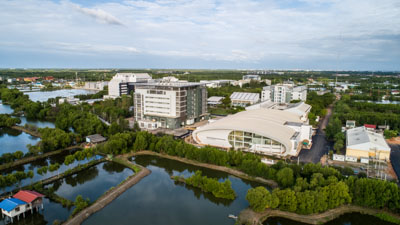
King Mongkut’s University of Technology Thonburi Campus
What are their research focuses?
KMUTT has a range of faculties (Faculty of Engineering; Faculty of Science; Faculty of Industrial Education and Technology) and schools (School of Information Technology; School of Architecture and Design; School of Bioresources and Technology; School of Liberal Arts) alongside other centres.
Each of these research themes is linked tightly to KMUTT’s identity as a leading institution within Thailand and worldwide.
Their theme Sustainable Bioeconomy, for example, covers Biofuels, Food for the Future, Sustainable Agriculture and Conservation Ecology. These themes are significant to Thailand which is known as “Food Basket of Asia” with an abundance of natural resources.
In addition, the theme of Creative and Learning Society looks at Future Learning and Future Society to explore the way art and technology converge to ensure that creative industries can maximise digital technology for positive impact and economic outcomes.
KMUTT and the WTUN
Dr Chawin Chantharasenawong, Vice President for Internationalisation
General Board Member: Dr Kanyawim Kirtikara, Senior Vice President for Research and Innovation, King Mongkut’s University of Technology Thonburi
Operational Board Member: Dr Chawin Chantharasenawong, Vice President for Internationalisation, King Mongkut’s University of Technology Thonburi
KMUTT joined the WTUN, as a member, in 2018. As a member, they have been involved in several WTUN activities from hosting and sending applicants on exchanges on themes such as: Nanotechnology and Biomaterials; Innovation and Entrepreneurship; and Enzyme Technology.
If you want to learn more about KMUTT, you can view their Member Profile or read some recent stories we have shared in our news roundups about their work:
Welcome to our ‘Member in the Spotlight’ series, where we showcase the research focuses and work of our members. We hope these profiles support you in getting to know our members and to identify themes in your work and focuses where you may be able to collaborate with colleagues at member institutions.
Introducing…Shibaura Institute of Technology
Who are Shibaura Institute of Technology?
Shibaura Institute of Technology (SIT) is located in Tokyo, Japan and provides practical skills and knowledge for the development of scientists and engineers who can contribute to sustainable global growth.
SIT is focused on university-wide internationalisation to provide a broad range of opportunity to ensure the development of their local and international communities.
Shibaura Institute of Technology Campus
What are their research focuses?
SIT has a range of faculties and conducts research within each of their respective fields:
Their work is closely linked to the United Nation’s Sustainable Development Goals (SDGs), with laboratories and centres are focussed on specific SDG targets. Some examples of this are:
Mechanical Engineering:
Health and Human Performance Laboratory (SDG 3; Good Health and Wellbeing)
Mechanical Dynamics Laboratory (SDG 4; Quality Education, SDG-9; Industry, Innovation and Infrastructure and SDG-11; Sustainable Cities and Communities)
Laboratory of Turbulent Transport Phenomena (SDG 7; Affordable and Clean Energy, SDG-9; Industry, Innovation and Infrastructure, and SDG-13; Climate Action)
SIT and the WTUN
Professor Muralidhar Miryala, Board of Councilor, Shibaura Institute of Technology
General Board Member: Professor Jun Yamada, President, Shibaura Institute of Technology
Operational Board Member: Professor Muralidhar Miryala, Board of Councilor, Shibaura Institute of Technology
SIT joined the WTUN, as a member, in 2018/9. As a member, they have been involved in several WTUN activities from hosting and sending applicants on exchanges on themes such as: Energy Systems; Clean Water; Sustainable Cities and Communities; International Collaboration.
If you want to learn more about SIT, you can view their Member Profileor read some recent stories we have shared in our news roundups about their work:
Welcome to our ‘Member in the Spotlight’ series, where we showcase the research focuses and work of our members. We hope these profiles support you in getting to know our members and to identify themes in your work and focuses where you may be able to collaborate with colleagues at member institutions.
Introducing…National Taiwan University of Science and Technology
Who are National Taiwan University of Science and Technology?
National Taiwan University of Science and Technology, also known as Taiwan Tech, was established in 1974 as the first university of its kind in Taiwan. Based in Taipei City, NTUST has a history of academic excellence, industry connections and international collaboration.
In both its research and teaching, NTUST promotes social and environmental sustainability and has been recognised for its contributions to the University Social Responsibility (USR) initiatives, reflecting their commitment to addressing global challenges.
With over 600 formal international collaborations with universities both within Asia and worldwide, NTUST has several notable partners including TU9 (Germany), Institut Teknologi Sepuluh Nopember and Insitut Teknologi Bandung (Indonesia). Their collaborative efforts include exchanges, dual degree programmes, laboratory visits and joint research funding.
National Taiwan University of Science and Technology Campus
What are their research focuses?
NTUST has six research centres which each receives funding from the Ministry of Education Taiwan.
The Taiwan Building Technology Centre investigates themes related to Intelligent and Interactive systems, Energy Saving and Storage Techniques for Green Environment, Building Structure and Hazard Prevention, and Creative Design and Innovation.
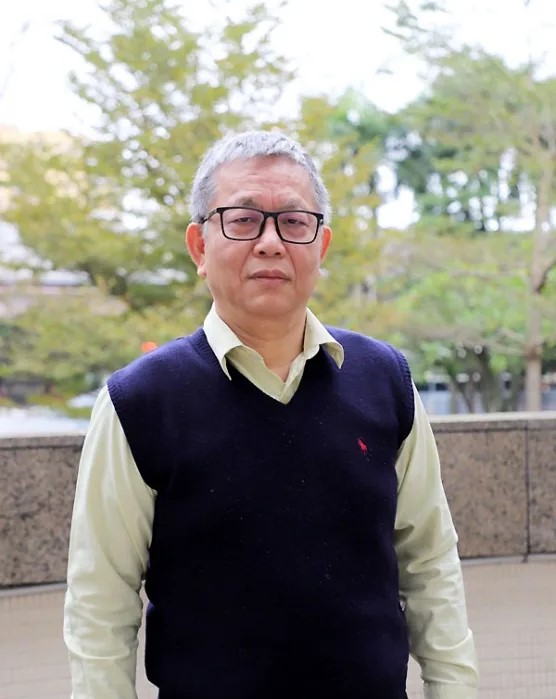
Professor Shun-Feng Su, Executive Vice-President, National Taiwan University of Science and Technology
General Board Member: Dr Yush Yen, President, National Taiwan University of Science and Technology
Operational Board Member: Professor Shun-Feng Su, Executive Vice-
President, National Taiwan University of Science and Technology
NTUST, as a member, has been involved in several WTUN activities from hosting and sending applicants on exchanges on themes such as: Polymer Science; Gender Inequality for Birth Safety; and Technology.
If you want to learn more about NTUST, you can view their Member Profile, read their newsletter, or read some recent stories we have shared in our news roundups about their work:
Welcome to our ‘Member in the Spotlight’ series, where we showcase the research focuses and work of our members. We hope these profiles support you in getting to know our members and to identify themes in your work and focuses where you may be able to collaborate with colleagues at member institutions.
Introducing…Suranaree University of Technology
Who are Suranaree University of Technology?
Suranaree University of Technology (SUT) is an innovation and sustainable university with a large campus based in the Northeast of Thailand. SUT is an academic technology hub and a collaborator in science, technology and innovation. They proudly solve complex community-based problems, contributing towards the Sustainable Development Goals (SDGs).
SUT collaborates with around 100 partners in the ASEAN (Association of Southeast Asian Nations) region including Shibaura Institute of Technology (Japan), Guizhou University (China) and Institut Teknologi Sepuluh Nopember (Indonesia). These collaborations include exchanges, training, placements, conferences, seminars and collaborative research projects. Outside of the ASEAN region, SUT has partners worldwide including France, Switzerland, Germany, and Japan.
Suranaree University of Technology Campus
What are their research focuses?
SUT has nine centres of excellence undertaking academic research in science and technology:
Advanced Functional Materials
High Energy Physics & Astrophysics
Biomechanics Medicine
Biomass
Electromagnetic Wave Application
Innovation for Sustainable Infrastructure Development
Entrepreneurship
Agricultural Product Innovation Technology (and Innovation for Korat Chicken Business Development)
Microbial Technology for Agricultural Industry
SUT also engages with social and local communities through its research to solve real-world challenges including poverty, inequality, climate change, peace, and justice.
In collaboration with UNESCO World Heritage Site Khao Yai National Park at Protection Unit 4 (Klong Plakang), the local community, and the Canadian Embassy, SUT is undertaking a project which aims to resolve human-wildlife conflict and community tensions through a ‘Natural Educational Smart Trail’. Another project which explores environmental sustainability includes utilising materials innovations to offer environmentally friendly products such as lightweight cellular cements, biodegradable food sleeves from rubber trees, and autoclavable bioplastic packaging.
Another project uses Boron Neutron Capture Therapy as a targeted cancer treatment and an environmentally safe and cost-effective plasma disinfection technology for hospitals and public buildings against COVID-19 and other microbials.
SUT undertakes this work through 4 Enterprise Units and 2 Social Enterprise Units:
Enterprise Units
Technopolis which explores incubation and technology transfer.
Suranaree University of Technology Hospital (SUTH) which engages with public services and medical innovation.
Suranaree University of Technology Farm, focussing on research and technology transfer.
Surasammanakhan, focussed on hotel accommodation.
Social Enterprise Units
Surawiwat School Academy which prioritises the study of science, technology, and language learning to steer the younger generation into STEM.
Plant Genetic Conservation Project under the Royal Initiative of Her Royal Highness Princess Maha Chakri Sirindhorn (RSPG).
SUT and the WTUN
Dr Anan Tongraar, Rector, Suranaree University of Technology
General Board Member: Dr Anan Tongraar, Rector, Suranaree University of Technology
Operational Board Member: Dr Mullika Sungsanit, Vice Rector for Engagement, Innovation and Entrepreneurship, Suranaree University of Technology
SUT, as a member, has been involved in several WTUN activities from hosting and sending applicants on exchanges on themes such as: Entrepreneurship; Sustainable Cities and Communities; Sensor-Embedded Insoles; and Clean and Affordable Energy.
The World Technology Universities Network is pleased to formally announce that as 1 August 2024, Mindanao State University, The Philippines has joined the WTUN as a member. This news marks the third institution to join the WTUN in 2024 and the first member university in The Philippines.
Professor Shirley Congdon, Chair WTUN, and the whole of the Network extends a warm welcome to Atty. Basari D. Mapupuno, System President, Mindanao State University, Professor Dr. Melba M. Angni, Director for International Affairs and Linkages and their colleagues to the WTUN, its Boards and programmes.
Professor Shirley Congdon, Chair WTUN
The WTUN’s diverse membership is united by a commitment to the inclusive advancement of sustainable scientific and technology teaching and research; each demonstrating a commitment to truly equitable innovation for the benefit of people and place.
“MSU brings to the WTUN a demonstrated commitment to social relevance, innovation, and sustainability ”
“We are delighted to welcome MSU as member of the Network. Alongside scientific excellence, MSU brings to the WTUN a demonstrated emphasis to social relevance, innovation, and sustainability in addition to a commitment to peace and development” says Professor Congdon. “MSU’s membership will strengthen our presence in South-East Asia and represents expansion into new territory, complementing our existing membership and expanding the regional impact and opportunities for truly global collaboration on the challenges facing humanity”.
Mindanao State University (MSU)
Atty. Basari D. Mapupuno, System President, Mindanao State University
“…membership (of the WTUN) will foster new research collaborations, grant opportunities, and international exchanges, raising MSU’s profile as a leader in technology and innovation.”
“Mindanao State University is proud to join the World Technology Universities Network (WTUN), marking a significant step in our commitment to academic excellence, innovation, and global collaboration. Through this partnership, we aim to enhance our educational offerings, research capabilities, and technological advancements by building strong alliances with leading institutions worldwide. We anticipate that our membership will foster new research collaborations, grant opportunities, and international exchanges, raising MSU’s profile as a leader in technology and innovation. We are committed to actively participating in WTUN’s initiatives, contributing our expertise, and upholding the network’s values of excellence, inclusivity, and sustainability to create impactful solutions that benefit both our local community and the global society.”
– Atty. Basari D. Mapupuno, System President, Mindanao State University
About MSU
Mindanao State University (MSU), established in 1961, is one of the premier higher education institutions in the Philippines, playing a pivotal role in the educational, social, and economic development of Mindanao, Sulu and Palawan (Minsupala). Originally founded to serve as a social laboratory to integrate the culturally diverse population of the region, MSU has since evolved into a comprehensive university system that spans multiple campuses across the Minsupala, offering a wide array of undergraduate, graduate, and professional programs. MSU’s mandate is not only to provide quality education but also to foster research, development, and community engagement, addressing the unique challenges and opportunities within Mindanao and beyond.
Branding itself as “National Peace University”, MSU holds a deep-seated commitment to peace education, recognizing its crucial role in fostering harmony and understanding in a culturally diverse region like Mindanao. With its unique geographical and socio-cultural setting, MSU is at the forefront of promoting peace and intercultural dialogue through its academic programs, community outreach, and research initiatives. The university integrates peace education into its curriculum across all disciplines, equipping students with the knowledge, skills, and values needed to become peace advocates and leaders. Additionally, MSU actively engages in peace-building activities and partnerships with local communities, government agencies, and international organizations, aiming to address conflicts, promote reconciliation, and enhance social cohesion. By fostering a culture of peace and inclusivity, MSU not only contributes to the stability and development of Mindanao but also serves as a model for peace education in higher education institutions.
The university boasts resources and facilities, research centers, and technology hubs that support its robust academic and research programs. MSU’s research, extension, and development agenda are strategically aligned with regional and national priorities, focusing on areas such as sustainable agriculture, environmental management, renewable energy, peace and development, women and gender studies, and cultural preservation. This agenda positions MSU as a critical driver of innovation and knowledge creation, aiming to provide solutions to the socio-economic issues facing Mindanao and the broader Southeast Asian region. MSU also prides itself as the country’s academic partner in the promotion and development of Halal Industry and Islamic Finance.
As a university for the people, MSU is committed to inclusivity, diversity, and community-oriented development. Its programs are designed to not only produce skilled graduates but also to contribute significantly to nation-building and regional development. The university’s strong emphasis on social relevance, innovation, and sustainability makes it an invaluable asset to the World Technology Universities Network (WTUN). MSU’s commitment to harnessing technology for social good aligns perfectly with WTUN’s vision of using global collaboration to address the world’s technological challenges, making MSU a vital partner in this international consortium.
The following form the research themes that MSU are prioritising over the next few years:
Human and Community Development
Culture, Tourism and Arts
Language, Media and Communication Research
Industry, Infrastructure, Innovation and Emerging Technology
Sustainable Economic Production, Food Security and Poverty Alleviation
The Biological-Physical-Chemical Environment
Health Research and Development
Law and Governance
Disaster Risk Reduction and Climate Change Adaptation
Vision
“MSU System aspires to be a Center of Excellence in Instruction, Research and Extension transforming itself into a premier and globally competitive national peace University”
Mission
MSU System is committed to:
Lead in social transformation through peace education and integration of the Muslims and other cultural minority groups into the mainstream society;
Ensure excellence in instruction, research development, innovation, extension, and environmental education and discovery;
Advance national and international linkages through collaboration; and
Demonstrate greater excellence, relevance, and inclusiveness for Mindanao and the Filipino nation.
The WTUN invites prospective members who share a commitment to the values of the Network. We have committed as a network to focus on guiding principles of sustainability and inclusivity. The WTUN is a signatory of the SDG Accord, the University and College Sector’s collective response to the Global Goals (www.sdgaccord.org) and the UN SDGs underpin and inform many of the Network’s priorities and activities.
The World Technology Universities Network is pleased to announce, following the signing of the Network’s Consortium Collaboration agreement, that Kalinga Institute of Industrial Technology (KIIT) will formally join the World Technology Universities Network (WTUN) as a member from 1 August 2024. This news marks the second[1] institution to join the WTUN in 2024.
Professor Shirley Congdon, Chair WTUN, and the whole of the Network extends a warm welcome to Vice Chancellor Dr Saranjit Singh, PhD-Engg, Dr Vikas Kumar Sabata, Joint Director International Relations and Ms.Bandita Sahoo, Deputy Director International Relations and their colleagues to the WTUN, its Boards and programmes.
Professor Shirley Congdon, Chair WTUN
The WTUN’s diverse membership is united by a commitment to the inclusive advancement of sustainable scientific and technology teaching and research; each demonstrating a commitment to truly equitable innovation for the benefit of people and place.
“KIIT brings to the WTUN a commitment not only to the teaching and development of its 40,000 students but its central mission of social responsibility”
“We are delighted to welcome KIIT as member of the Network. Alongside scientific excellence, KIIT brings to the WTUN a commitment not only to the teaching and development of its 40,000 students but its central mission of social responsibility” says Professor Congdon. “KIIT’s membership will strengthen our presence in India, complementing our existing membership and expanding the regional impact and opportunities for truly global collaboration on the challenges facing humanity”
Kalinga Institute of Industrial Technology (KIIT)
Professor Saranjit Singh, Vice Chancellor, Kalinga Institute of Industrial Technology
“Together with WTUN and its esteemed members…[a] focus on sustainable technology and commitment to equity will pave the way for a brighter and more sustainable future…”
“KIIT Deemed University is delighted to enter into the partnership with the World Technology University Network (WTUN), marking our official membership in this prestigious network of universities” says Prof Singh. “The collaboration heralds exciting prospects for global mobility. We intend to nurture a sense of global citizenship by advancing research and innovation. Together with WTUN and its esteemed members, our collective mission is to confront global challenges head-on through research, knowledge dissemination, and innovative solutions. Our focus on sustainable technology and commitment to equity will pave the way for a brighter and more sustainable future.”
About KIIT
Kalinga Institute of Industrial Technology (KIIT), a household name in the education sector, has become a sought-after destination in India for professional studies. It is admired all over for the quality of its academic courses, its community outreach work and as a university of compassion and humanitarianism. It has become a case study because no other educational institution in India has grown in its scope and scale as much as KIIT has in a short span of 25 years. Its incredible transformation is truly a journey from Soil to Silver.
KIIT started in 1992-93 as an Industrial Training Institution. However, 1997 is considered the base year for the University as undergraduate and postgraduate courses in Engineering, Management and Computer Applications were added. In 2007, many new schools were added to its umbrella – School of Law, Biotechnology, Medical Sciences, Dental Sciences, Nursing, Mass Communication, Film and Media, Fashion and KIIT International School.
Today, KIIT offers professional education to around 40,000 students from across India. This includes 2000 international students from 65 countries. The alumni of KIIT, over a lakh (million) of them, have made their mark in their respective careers in academics, corporate organizations, civil services and enterprise. Furthermore, KIIT continues to shine on the global stage, with Stanford University’s latest database of the ‘World’s Top 2% Scientist’ featuring 20 distinguished individuals from KIIT and its constituent units. This recognition reaffirms KIIT-DU’s position as a hub for some of the brightest minds in the field of academia and research. (Continued below)
Vision
“To create an advanced centre of professional learning of international standing where pursuit of knowledge and excellence shall reign supreme, unfettered by the barriers of nationality, language, cultural plurality and religion.”
Mission
Imparting value based quality education of international standard and imbibing skill for solving real life problems.
Inculcating global perspective in attitude.
Creating leadership qualities with futuristic vision.
Fostering spirit of entrepreneurship and realisation of societal responsibilities.
Cultivating adaptation of ethics, morality and healthy practices in professional life.
Instilling habit of continual learning.
Encouraging and supporting creative abilities and research temperament.
Establishing and promoting close interaction with industries and other utility sectors and keeping abreast with state-of-the-art technology.
More about KIIT
KIIT-TBI has been awarded the Successful Incubator of the Year 2023 by the Startup Odisha, MSME Department, Govt of Odisha. KIIT-Technology Business Incubator (KIIT-TBI), the innovation hub of KIIT, has been conferred the ‘Incubator of the Year 2023’ Award by the Asian Association of Business Incubation (AABI) in Bangkok, Thailand. This achievement underscores our commitment to fostering innovation and excellence in the realm of science and technology
KIIT has persistently enhanced its position in numerous national and international higher education rankings, striving to establish itself as a global hub of quality education. It is gratifying to note that KIIT is ranked among the top 16 public and private Universities in India as per the National Institutional Ranking Framework (NIRF) India Rankings 2023 by the Ministry of Education, Govt. of India. The prestigious Times Higher Education (THE) World University Rankings 2024 has placed KIIT in the cohort of 601-800 globally. In subject rankings, Computer Engineering and General Engineering programmes have been placed in the rank band of 401- 500 and 501-600 respectively. KIIT has been ranked 17th globally in Sustainable Development Goal 10 (SDG 10: Reducing Inequalities) & 201-300 in the Overall Category by THE Impact Rankings 2023. The University has been ranked 168th and 10th best among Indian universities in ‘THE Young University Rankings 2024’. KIIT has been ranked in the band of 351-400 by the QS World University Rankings: Asia 2024 & 90th among Southern Asia 2024. KIIT has also been the top university for innovation among private institutions for two consecutive years (2020, 2021) according to AICTE, Government of India. The University has also been accredited in the highest A++ grade by the National Assessment and Accreditation Council (NAAC), India. Due to its flexible academic design, the B. Tech programme of the University has received ABET Accreditation, USA besides accreditation from IET, UK. Further, all its undergraduate Engineering Programs have been accredited by the National Board of Accreditation (NBA) under Washington Accord for six years.
One would find it difficult to imagine that such a celebrated institution with a global reputation was established by an unassuming humble being, Dr. Achyuta Samanta, the Founder of KIIT (Kalinga Institute of Industrial Technology and KISS (Kalinga Institute of Social Sciences- World’s largest Tribal Institution), who started the institute with all of Rs 5000 as the initial investment. He had big dreams and a passion to make a difference. Dr. Samanta started KIIT in two rented rooms with 12 students and 2 staff. The modest institution has now grown to incomprehensible propositions and is spread over a vast 36-square-kilometre academic township. Its 25 lush green campuses employ over 3000 eminent faculty and researchers and 15000 staff. KIIT and KISS together is a family of over a lakh people. The campus houses a 2600-bedded super speciality hospital, KIMS, a multi-storey central library, a central research facility, a 22-storey research and innovation wing, auditoriums – the largest one with 5000 seating capacity, 18 sports complexes, many international standard stadiums covering all sports, 30 food courts, and a rose garden. The institution takes pride in being the greenest campus in India.
KIIT has made colossal contributions to Sports. Currently, 11 Olympians pursue their education at KIIT. The University has been conferred the Sport star Award and FICCI India Sports Award for the promotion of sports. KIIT gets the “Best Sports Facility” award in the first CII Sports Business Awards 2023 category for creating top-notch sports facilities in India. KIIT and KISS are the nodal centres for the FIFA Football for Schools Programme in Asia. KIIT has been chosen for the Rashtriya Khel Protsahan Puruskar 2022 for encouraging sports through Corporate Social Responsibility. Besides its immense contribution to the development of the state and the city, KIIT has also promoted local art, culture, sculpture, rural development, literature and spiritualism. All the achievements of KIIT have been possible because of its founder – Dr. Achyuta Samanta – lovingly called Samanta Sir – the epitome of principles, discipline, hard work, and selfless service. It truly is an inspiring story of a humble man steering two institutions to glory despite all the hardships and struggles.
The WTUN invites prospective members who share a commitment to the values of the Network. We have committed as a network to focus on guiding principles of sustainability and inclusivity. The WTUN is a signatory of the SDG Accord, the University and College Sector’s collective response to the Global Goals (www.sdgaccord.org) and the UN SDGs underpin and inform many of the Network’s priorities and activities.
University of Applied Sciences Upper Austria have shared with us numerous upcoming events that their institution are involved with, which they feel would be of benefit to WTUN members.
Please see below for details of each event:
Student Opportunities
June 2024
9-24 July: International Summer Academy in Engineering for Women (ISAE4W) 2024
Location: University of Applied Sciences Upper Austria, Wels, Austria
17-20 June 2024: 20th International Conference on Intelligent Environments (IE’24) / 13th International Workshop on Intelligent Environments Supporting Healthcare and Well-being (WISHWell 2024)
Location: Ljubljana, Slovenia / Online (Hybrid)
Important Dates:
15 May: Deadline for Non-Author Regular Registration
12 June: Deadline for Non-Author late Registration
Whilst the WTUN delivers numerous activities which facilitate and/or fund international collaboration between members, we also encourage colleagues to initiate and foster their own connections outside of the network’s activities.
Assistant Professor Colins Imoh, from the University of Bradford, visited Atlantic Technological University’s Department of Law, Public Service, and Education.
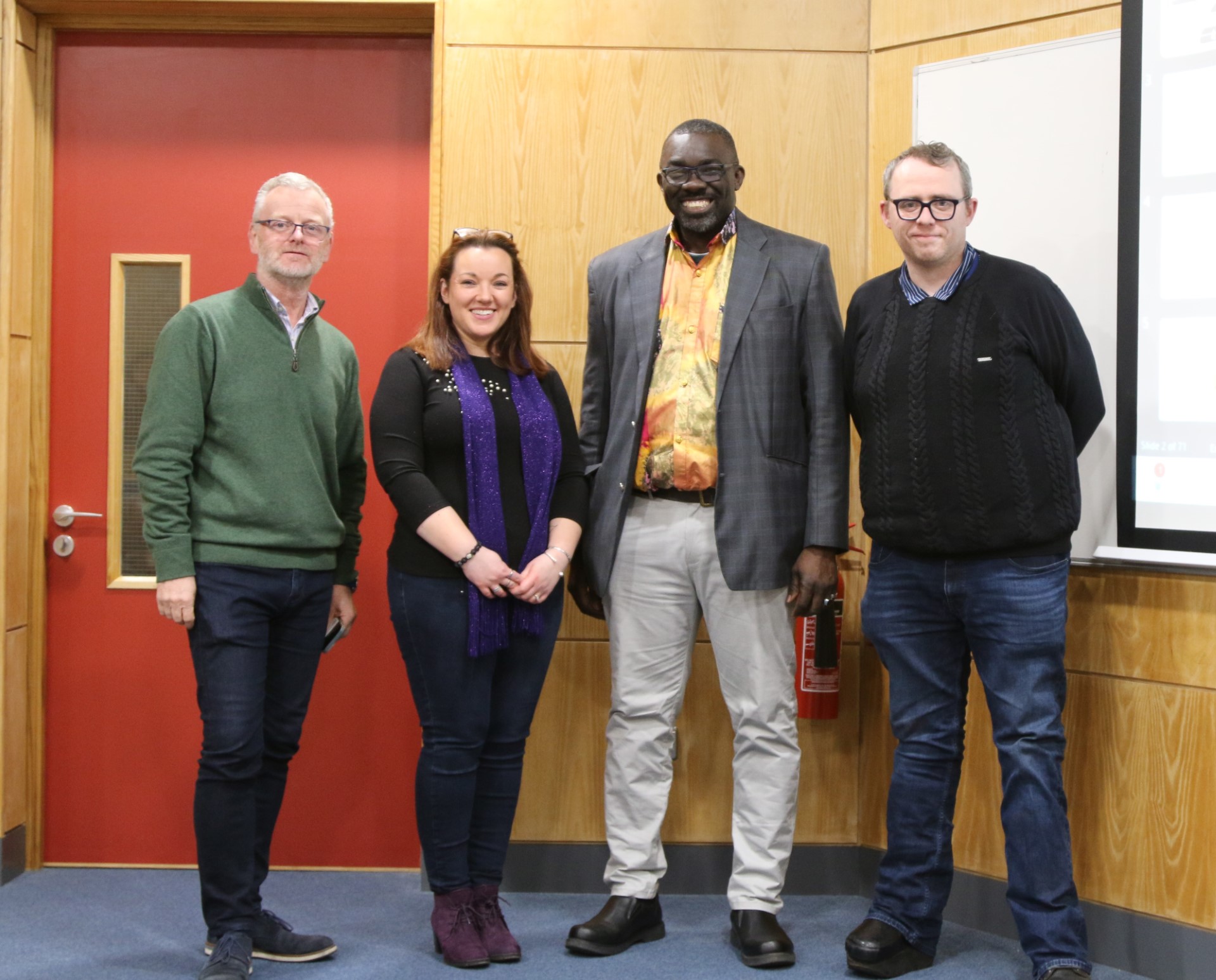
Dr Colins Imoh (second from the right) with colleagues from Peace Studies at Atlantic Technological University. Dr Ciarán Ó hAnnracháin, ATU’s Operational Board Member is also pictured (far left).
His visit allowed him to engage in collaborative research activities. Below is a brief summary of the visit in Dr Imoh’s own words:
“I was hosted by the Department of Law, Public Service, and Education at Atlantic Technological University in Letterkenny, Ireland. During my stay, I engaged in research and collaboration activities, both on campus and in the community. I had the opportunity to share my knowledge and provide feedback in some classes. I gave a lecture on Peace and Conflict Resolution to final-year law students. Additionally, I met with an environmental group that advocates for a cleaner Donegal and provided insights on making their advocacy more impactful.
One of the highlights of my visit was giving a public lecture on the crisis in Gaza, titled “Building Peace and Justice in a Troubled World – Exploring the Gaza-Israel Conflict” on Tuesday, March 12th. The lecture aimed to understand better the conflict’s roots, the ongoing and evolving humanitarian crisis, and how a peaceful resolution may be found. It was a humbling experience to share my expertise with such a diverse and engaged audience, and I am grateful for the opportunity to have made a difference. I received positive feedback from those who attended, and I hope my visit will inspire others to come together and positively impact their communities.”
His talk received positive feedback from students and staff, commending the opportunity his lecture presented to students to challenge their beliefs and “certainty” in a positive way and the balanced approach Dr Imoh used to discuss the “highly emotive subject of the conflict in Gaza”.
“The trip resulted in collaborative research and other activities. Currently, I am working alongside colleagues at ATU to explore the perspectives of young people on the Northern Ireland crisis. The main objective is to understand the impressions of those who were born after the Good Friday agreement in 1998.
Furthermore, I was invited to give a talk on 21st March 2024, to commemorate the International Day for the Elimination of Racial Discrimination. The talk focused on the importance of being proactively non-racist instead of just avoiding being racist. The president of ATU was present during the online talk, which was well-received.”
Colleagues at ATU were grateful to Dr Imoh for his engaging talk and the insights he provided on antiracism.
We thank Dr Imoh for sharing his experience with us, and colleagues at ATU for collaborating.
If you, or your colleagues, are collaborating with WTUN member institutions and would like to share your experiences, please email wtun@bradford.ac.uk.
The World Technology Universities Network is delighted to announce the Southern Alberta Institute of Technology (SAIT) is joining the World Technology Universities Network (WTUN). Professor Shirley Congdon, Chair WTUN, and the whole of the Network welcome Dr. David Ross, SAIT President and CEO, Mark Butler, Vice President, Corporate Development, Applied Research and International, and their colleagues to the WTUN, its Boards and programmes.
Professor Shirley Congdon, Chair WTUN
The WTUN’s diverse membership is united by a commitment to the inclusive advancement of sustainable scientific and technology teaching and research; each demonstrating a commitment to truly equitable innovation for the benefit of people and place.
“SAIT brings with it distinctive benefits and strengths…including applied research and development expertise…”
“We are delighted to welcome the Southern Alberta Institute of Technology as member of the Network. SAIT brings with it distinctive benefits and strengths to the WTUN, including demonstrated, deep-rooted applied research and development expertise,” says Professor Congdon. “We believe that they complement our existing membership and will expand the regional impact and opportunities for truly global collaboration on the challenges that the WTUN has committed to addressing.”
History
Established in 1916 in Calgary, Alberta, Canada, SAIT was the first publicly funded technical institute in North America and is the second oldest post-secondary institution in Calgary. One of Canada’s top applied research colleges, SAIT has 77,000 square feet of specialized research labs and facilities, and full-time research staff dedicated to providing services organizations need to take their products from concept to prototype.
SAIT’s Applied Research and Innovation Services (ARIS) department engages in industry-driven research across a wide knowledge base in four distinct areas:
Centre for Innovation and Research in Advanced Manufacturing and Materials (CIRAMM)
Centre for Innovation and Research in Unmanned Systems (CIRUS)
Centre for Energy Research and Clean Unconventional Technology Solutions (CERCUTS)
As a national leader in applied research, SAIT’s values and commitment to collaboration through the cultivation of skills, driving innovations and the advancement of economic and environmental efforts, locally and globally, align with the WTUN’s vision and that of its existing members. We believe their membership will be a great benefit to the Network.
“[SAIT’s]…commitment to sustainable research and innovation aligns with the goals set by the WTUN…”
Mark Butler, Vice President, Corporate Development, Applied Research and International, SAIT
“SAIT is excited to explore this new opportunity for collaboration through this diverse network of technology-focused post-secondary institutions. Our commitment to sustainable research and innovation aligns with the goals set by the WTUN to share knowledge and best practices to support building capacity in technology and education,” says Butler. “The opportunity will continue to advance SAIT’s commitment to excellence while broadening our community’s worldview.”
More about SAIT
Established in 1916, SAIT was the first of its kind, publicly funded technical school in North America. As a global leader in applied education and research — serving nearly 40,000 students annually — SAIT offers certificate, diploma, post diploma, apprenticeship and applied degree programs, baccalaureate degrees, corporate training and more than 1,000 continuing education courses, along with six dedicated, award-winning areas of research and capacity for new and emerging research. Curriculum and research priorities are developed through industry partnerships to ensure graduates have the skills and knowledge required to fulfill the demand for talent. SAIT is honoured to be recognized by Mediacorp Canada Inc. as one of Alberta’s Top Employers for 2023, and to be ranked sixth by Research Infosource Inc. in the Top 50 Research Colleges in Canada for 2023. CEOWORLD Magazine ranked the SAIT School of Business #51 on the list of Best Business Schools in the World for 2023, and the School of Hospitality and Tourism placed #15 on their list of Best Hospitality and Hotel Management Schools in the World — the only Canadian school listed — for 2023.
The WTUN invites prospective members who share a commitment to the values of the Network. We have committed as a network to focus on guiding principles of sustainability and inclusivity. The WTUN is a signatory of the SDG Accord, the University and College Sector’s collective response to the Global Goals (www.sdgaccord.org) and the UN SDGs underpin and inform many of the Network’s priorities and activities.
“…the Digital Health Enterprise Zone (DHEZ) in Bradford, which has trained adult care workers in the latest digital healthcare tech, provided experiential learning for students and hosted vaccine trials in the height of the pandemic. This is a model for how UEZs can help the UK tackle skills shortages in healthcare, and with its focus on AI developments, the UEZ feeds into the government’s ambition for the UK to become a science and technology superpower by 2030.
“The Digital Health Enterprise Zone has brought together local healthcare workers, researchers and SMEs in Bradford, with the shared goal of revolutionising healthcare to improve and save lives.
“We are especially proud of our DHEZ’s role in the pandemic response. Over 700 people volunteered to take part in the Novavax trials which transformed the way we support patients recovering from COVID today and proved the impact of working collaboratively. Our DHEZ is an evergreen solution to growth in Bradford. We hope that the businesses the DHEZ has fostered will go on to share their knowledge and experience with future businesses.”
Professor Liz Breen DHEZ Director at the University of Bradford”